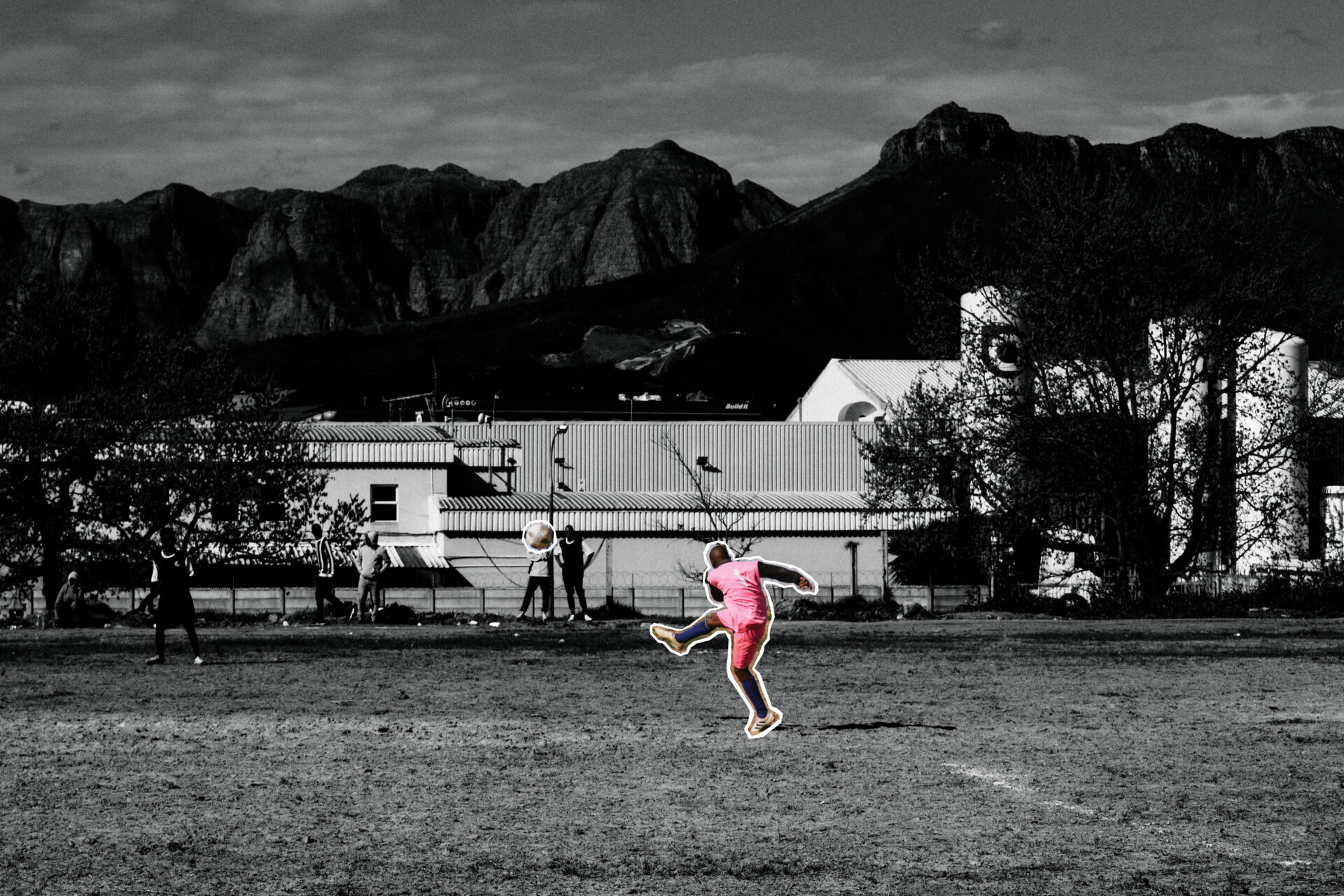
Kicking
for change
Soccer is more than just a game; it is a powerful tool for transformation. Across South African communities, it is being used to help young people build confidence, teamwork and leadership skills by breaking down social barriers and opening doors.
The sun sets on a soccer pitch in Kayamandi as a dozen boys chase after the ball, their shouts echoing across the field. On the sidelines, coach Kwezi Mfazweni calls out instructions, his eyes locked in on every movement. He does not just see soccer, he sees futures being reshaped.
“I don’t consider it as football only,” Mfazweni says. “But [rather] as something that removes kids from drugs, removes them from crime and allows them to see themselves as better leaders of tomorrow.”
For many children here, afternoons could easily be spent on street corners, pulled into cycles of poverty or addiction. Instead, the field becomes a place where teammates turn into family and coaches become mentors, says Mfazweni.
Across Stellenbosch and beyond, soccer is being used as a tool for transformation. On the pitch, young people learn discipline, resilience and teamwork, says Daniel Thomae, the founder of training4changeS (t4c). Organisations like t4c have woven these lessons into structured programmes that link soccer with life skills, mentorship and education.
“We have 66 boys and 86 girls, mostly from Kayamandi, Cloetesville and Ida’s Valley,” says Thomae. “Sport provides an environment for young people to explore their gifts and talents, to experience victory and defeat, to push for high standards and to achieve more than they think is possible.”
In many communities across South Africa, young people face limited access to education, career opportunities and safe recreational spaces. High unemployment, a shortage of resources and a lack of structured activities often make it difficult for them to plan for the future.
This is according to a study performed by StatsSA, which found that at the end of the second quarter of 2025, the country’s youth unemployment rate sat at 46.1%.
Grassroot Soccer (GRS) South Africa is an international organisation that uses soccer as a platform to equip young people with life-changing information and mentorship that helps them live a healthier life.
“GRS [South Africa] partners with a network of South African community partners, including schools, the government, health clinics, youth clubs, communities, parent groups and social service providers,” says Mbulelo Malotana, managing director of GRS South Africa.
These partnerships are used to support young people. Individuals working with these organisations act as role models and mentors, often offering guidance and encouragement, according to the GRS website.
Malotana says that such broad collaboration demonstrates how sport can unify diverse stakeholders around adolescent health and societal issues.
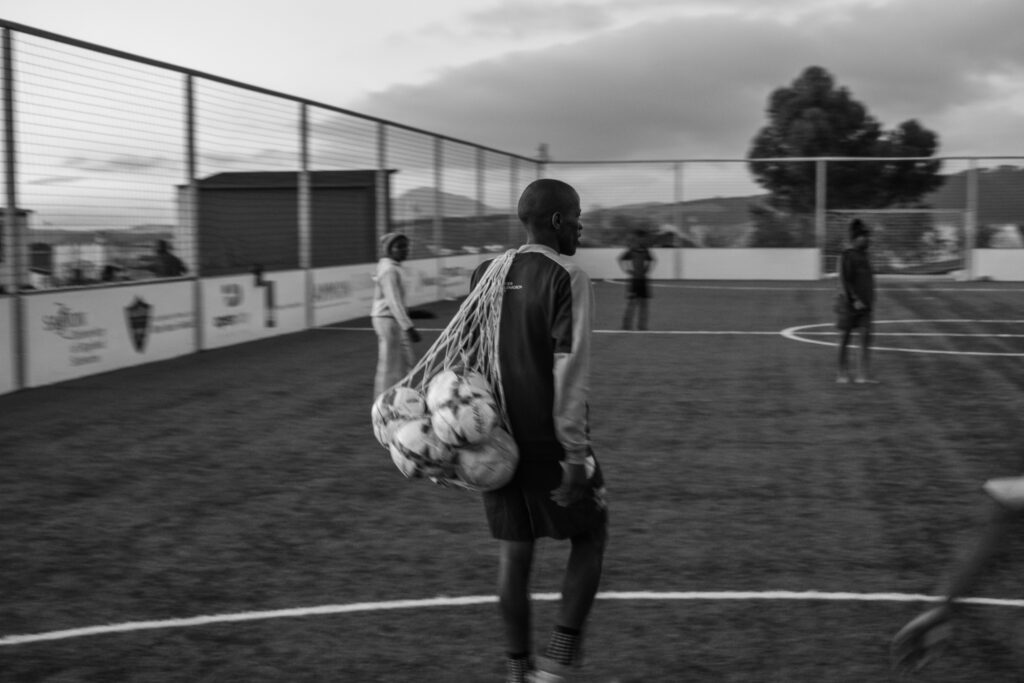
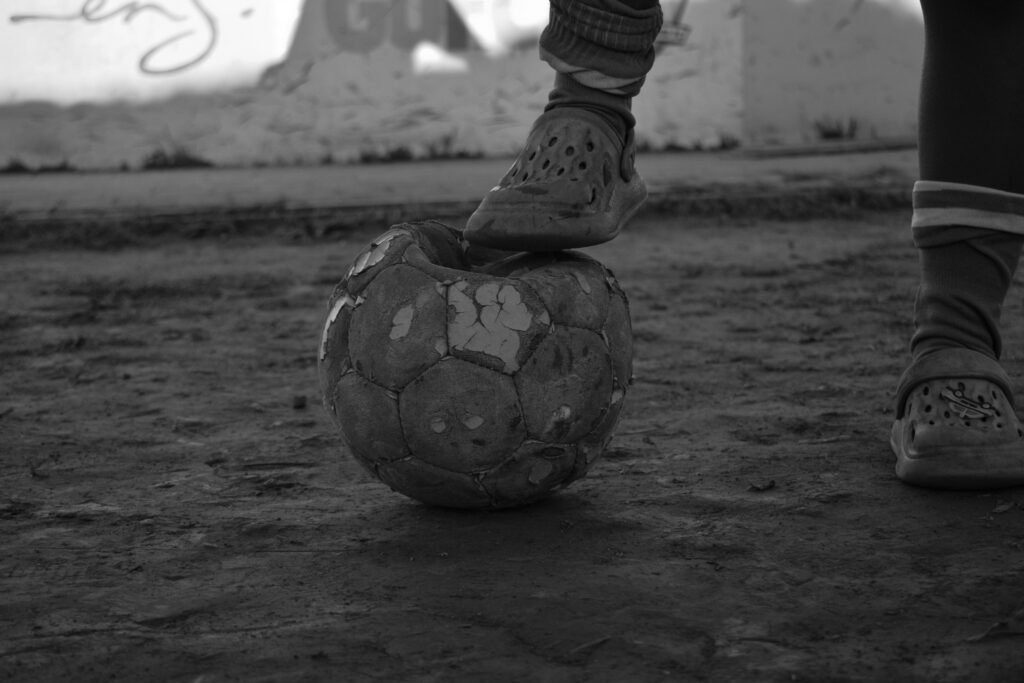
Kwezi Mfazweni (left), the founder and coach of Warriors Soccer Academy, on the soccer field with soccer balls on his back. Meanwhile, a young boy who prepares to take a kick (right). PHOTOS: Hlomla Mdala
Zooming in
Sports development agencies throughout the country are focused on the potential of sporting activities, not only as a form of recreation, but also as a platform for educating young people, according to Thomae.
Furthermore, sports development agencies equip young people with leadership skills and create a platform for social change, says Thomae.
Initiatives like t4c connect life skills with physical training, helping to foster inclusion and open paths that many young people thought they would never walk, he says.
This is usually achieved through internships, scholarships and the exposure of young people to different worlds, he says.
However, the benefits of sports go beyond opportunity and skills-building. Regular exercise also protects young people’s mental health. This is according to Dr Mark Orpen-Lyall, an organisational psychologist specialising in people development.
“A study published in the American Journal of Psychiatry […] confirmed that just one hour of exercise a week could mitigate depression,” says Orpen-Lyall.
Sport is not limited to physical health. It also supports social and emotional development among young people. This is according to Elton Davids, the founder of All My Sports SA, an organisation that provides support services to schools, clubs, non-governmental organisations and federations to develop sports. According to Davids, All My Sports SA assists the aforementioned groups with developing sports and the heads up the efforts to redistribute donated sports equipment.
The benefits of sports include “improved mood and self-esteem, reduced symptoms of depression, improved sleep, improved cognitive function and stimulation”, according to Davids.
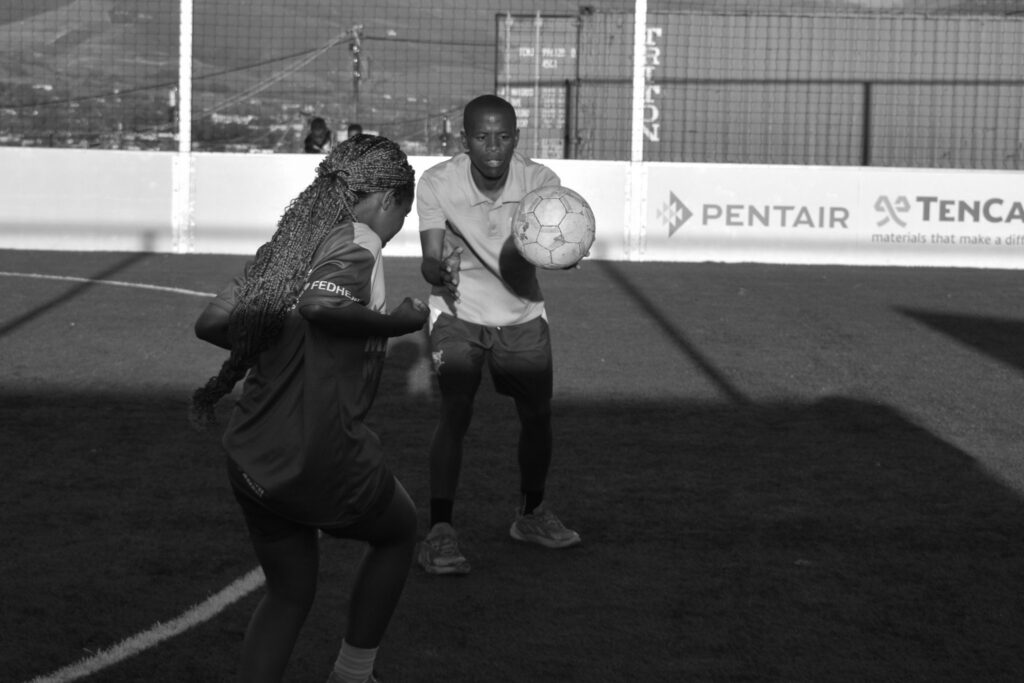
Kwezi Mfazweni, the founder and coach of Warriors Soccer Academy, trains a young female soccer player. PHOTO: Hlomla Mdala
‘More than sport’
Throughout South Africa over the past decade, a range of non-profit organisations, schools and private initiatives have stepped in to bridge the gaps existing in young people’s educational opportunities, connecting them to their future, according to Thomae. This is achieved through programmes that often combine training with workshops on life skills, academic support and mentorship, he says.
He says that t4c’s soccer academy is dedicated to more than just developing athletes, using the sport as a tool to teach life skills, build character and empower young people to grow, both on and off the pitch.
“Our motto is ‘more than sport’, and we look at everything we do as education – either inside the classroom or outside the classroom,” he says.
“Our motto is ‘more than sport’, and we look at everything we do as education – either inside the classroom or outside the classroom.”
According to Malotana, coaches and mentors work closely with each player, guiding them on how to improve their soccer skills and navigate challenges off the pitch.
“People mostly know us for our soccer academy, which includes four teams of boys from around Stellenbosch, from under-11 to under-19,” says Thomae. “[The soccer academy] is an anti-racist, safe space where the boys are receiving high-level football coaching, academic support, education outside the classroom and mentoring.”
“Our play-based approach creates a space where young people can talk openly about topics like HIV-prevention, mental health and gender-based violence,” says Malotana.
An example of this includes an initiative run by GRS South Africa called SKILLZ Plus. This programme is led by coaches who openly live with HIV. According to the GRS website, the 10-lesson curriculum “supports youth living with HIV by providing critical health knowledge and encouragement to access/adhere to medication”.
The benefits of soccer are not limited to individual players. Communities that support youth sport often see greater cohesion, stronger relationships between generations and a sense of shared pride in local achievements, says Mfazweni.
“When we have tournaments that are not in Stellenbosch, parents and other people usually donate money for us to be able to commute and for food,” he says. “This shows us that we, the community, appreciate the work that we do.”
While challenges such as funding and sustainability remain, there is growing recognition of sport’s potential as a practical and accessible tool for development, he adds.
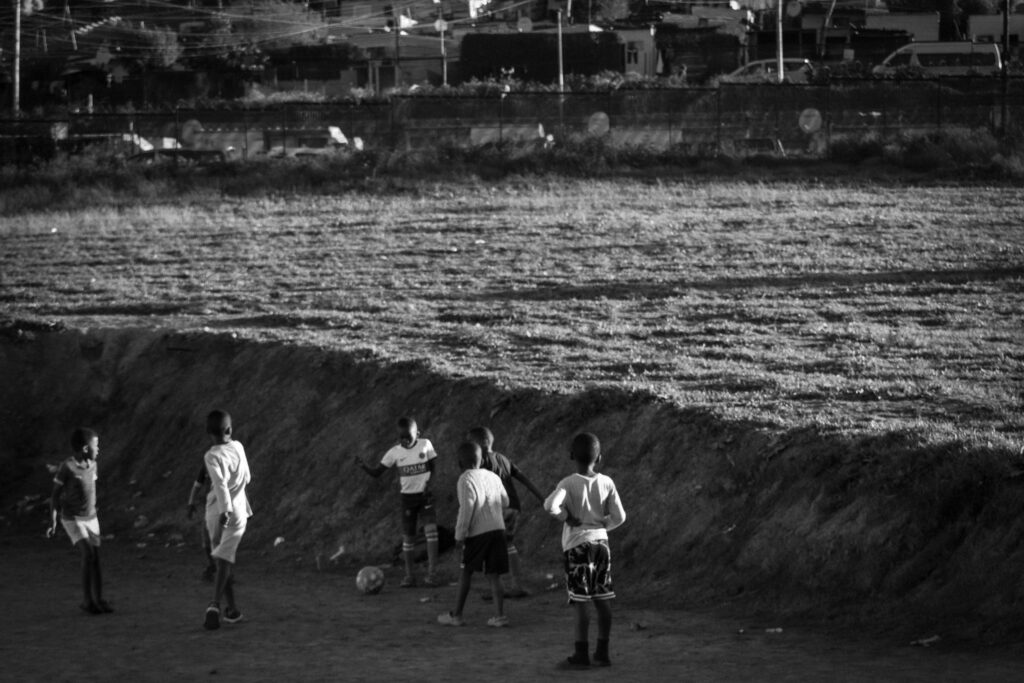
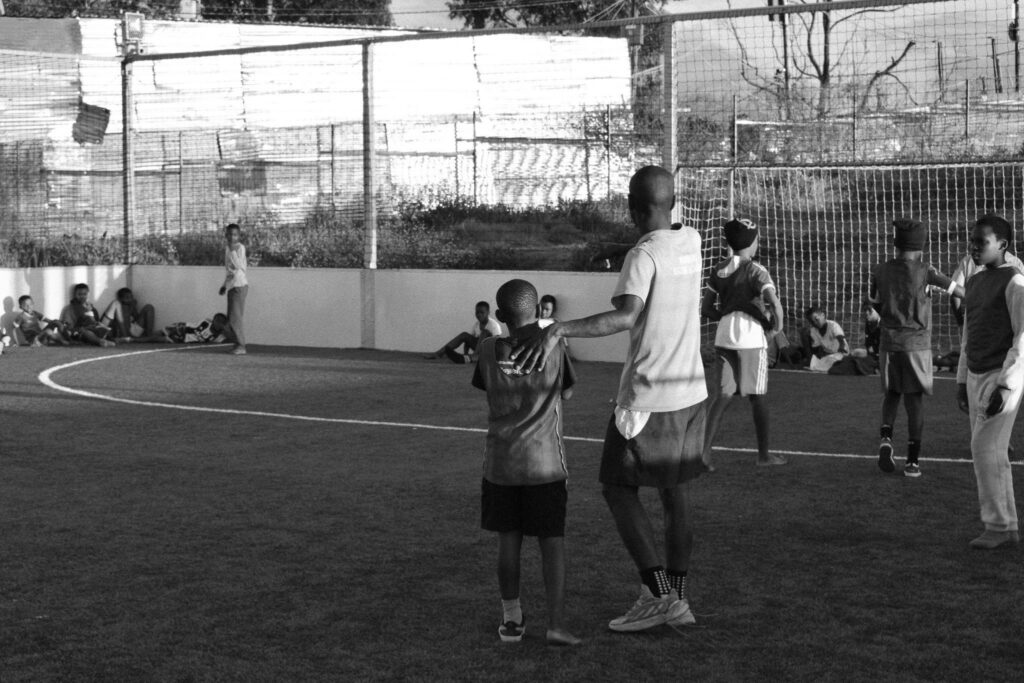
Young boys play soccer outside the Kayamandi Primary School soccer field (left) whilst Kwezi Mfazweni coaches another team inside (right). PHOTOS: Hlomla Mdala
From player to coach
The transition from player to coach was not an easy one for Usiphile Nxele, who grew up in Durban. He currently coaches soccer at Northwood School in Durban.
“It was a very difficult decision,” he recalls. “I finished matric, and I expected to be getting offers to play. Some offers weren’t what I wanted, and I began to say, ‘You know what? I do not know about this football thing anymore’.”
His path shifted when Mini Khoza, head of soccer at Northwood School, offered him a coaching role. “I came back the next year to coach, and we went unbeaten. [We] won the team of the year. From there, things just grew.”
Even as a player, he had always guided younger teammates, offering advice and mentorship. “I wanted to inspire more. I wanted to equip them so that what happened to me wouldn’t happen to other kids,” says Nxele. “I wanted to open channels and avenues for them to succeed in football [soccer].”
Today, he balances coaching with his studies, a bachelor’s degree in management of sports and leisure at eta College, a private higher education college that offers courses in sport, exercise and wellness. He is hoping to explore the roles of tactical or performance analyst and other administrative positions in soccer.
“Whatever life throws at me, it’s going to be football-related,” he says.
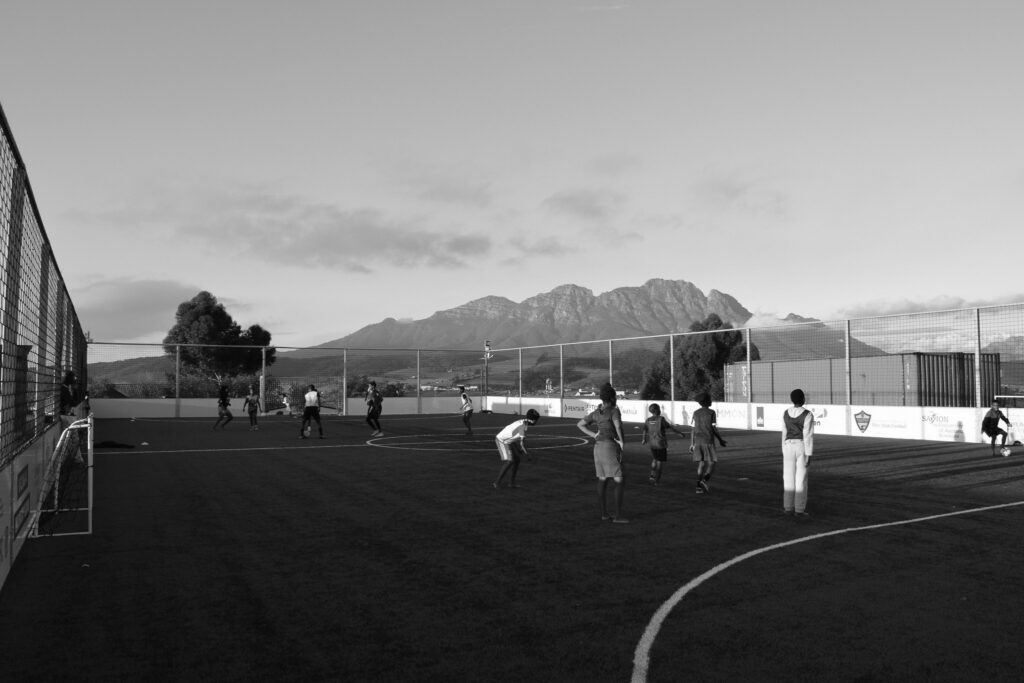
Soccer practice at Kayamandi Primary School’s soccer field. PHOTO: Hlomla Mdala
One player’s journey
Soccer academies such as t4c have been part of developing young people, academically – through bursaries – and physically, over the past decade. Nakhane Zathu, curently 17, attends Calling Academy in Stellenbosch as part of a bursary he received from t4c.
“Being part of t4c has been the most impactful part of my life,” says Zathu. “The bursary, to me, meant more than just getting help financially. It meant that all of the time, sacrifices, sessions and little fights with my mother were all worth it.”
He says that the academy has not only shaped his on-the-field skills, but it has also shaped who he is off the field.
“Off the field, being part of t4c has helped with my character development, as they shaped me from being a typical black boy from the township to being the young man that I am, fighting for change,” says Zathu.
Amanda Zathu, Nakhane’s mother, says that soccer has contributed to her son’s character.
“His success in school and beyond has been greatly aided by the discipline, teamwork and resilience he gained playing soccer,” she says. “I am grateful for the good effect it has had on his prospects.”
In 2024, he had the opportunity to travel overseas for a soccer camp for the first time. He says that this was a once-in-a-lifetime trip that he will forever be grateful for.
“From the trip, I learnt how diversity and communities drive innovation, experienced a whole new pace of life […] and gained experience to bring back home,” says Zathu. “At the same time, it helped me to appreciate South Africa’s culture a bit more.”
Soccer in South Africa may not solve every challenge, says Mfazweni. However, on the pitches of communities like Kayamandi and academies like t4c, it continues to shape the future, from players who become coaches, to members of the youth finding discipline and hope in the game.
Soccer is becoming more than a sport, says Thomae. New generations continue to lace up their boots, and cycles of mentorship and possibility rise again.
Barriers to development
Despite all the work done by soccer academies like training4changeS (t4c), these initiatives are still faced with financial challenges that sometimes affect their work.
However, these soccer academies remain optimistic that they will receive the support they need, says Kayamandi-based soccer coach Kwezi Mfazweni.
“This type of work is hard and full of opposition. Like most [non-governmental organisations], we face challenges with funding,” says Daniel Thomae, founder of t4c.
“Through the years, we have also had a lack of support from some members of the Stellenbosch community, but slowly we are seeing that change.”
The financial deficit in community soccer clubs is something that affects their work within the communities. This is according to Elton Davids, the founder of All My Sports SA, an organisation that provides support services to schools, clubs, non-governmental organisations and federations.
All My Sports SA assists these groups with sports development by running sport equipment donation drives and distributing the equipment to the relevant parties, says Davids.
“Grassroots clubs have insufficient equipment, facilities, qualified coaches and [a lack of] funding being channelled to where it’s needed most,” he says.
Despite all the issues that these clubs face, it is the organisation’s mandate to assist where they can, says Davids.