subtle defiance
What does feminism look like when it steps away from grand campaigns and shifts into day-to-day life? Individuals are finding ways to incorporate feminist values into their everyday lives in a world where gender itself is political.
Annemarie Maritz, a well-rooted Stellenbosch resident, still recalls a job interview from many decades ago, where she was asked whether she planned on having more children. It was a different time back then. She laughed it off. Today, her response would have differed greatly, she says.
Maritz’s story rests alongside the voices of academics and campaigners who show that feminism consists not only of debates and protests, but is also conceived in daily choices, important conversations and confronting existing inequality.
Defining the buzzword
Feminism can be defined in many ways, says professor Amanda Gouws, a distinguished academic in the field of political science at Stellenbosch University (SU). Gouws specialises in gender politics and says her entire being is focused on active feminism.
She defines feminism, in simple terms, as “everything that distinguishes [a woman] from a doormat”. Feminism is a philosophy, but also a movement, she says. It’s about “how you position yourself to understand gender inequality and then to change it”.
Others have said that defining the concept of feminism is an easy task. “Feminism is [believing] in equality of sexes and genders,” according to professor Kopano Ratele, who specialises in critical men and masculinity studies within SU’s psychology department. “And I would ask, you know: ‘Why wouldn’t anybody want to have equality between sexes and genders?’.”
Ratele describes himself as a pro-feminist man – a man who is in complete support of feminism.
According to Gouws, feminism is not only a theory, but also a praxis by which one should understand women’s experience of inequality “and then act on that to change it”.
One must understand that although women and men have physical differences, they are socially, politically and economically equal, says professor Anita Bosch, who is the research chair of Stellenbosch Business School’s field study examining women at work.
“Feminism is about the movement towards understanding that and trying to make that happen on Earth,” says Bosch.
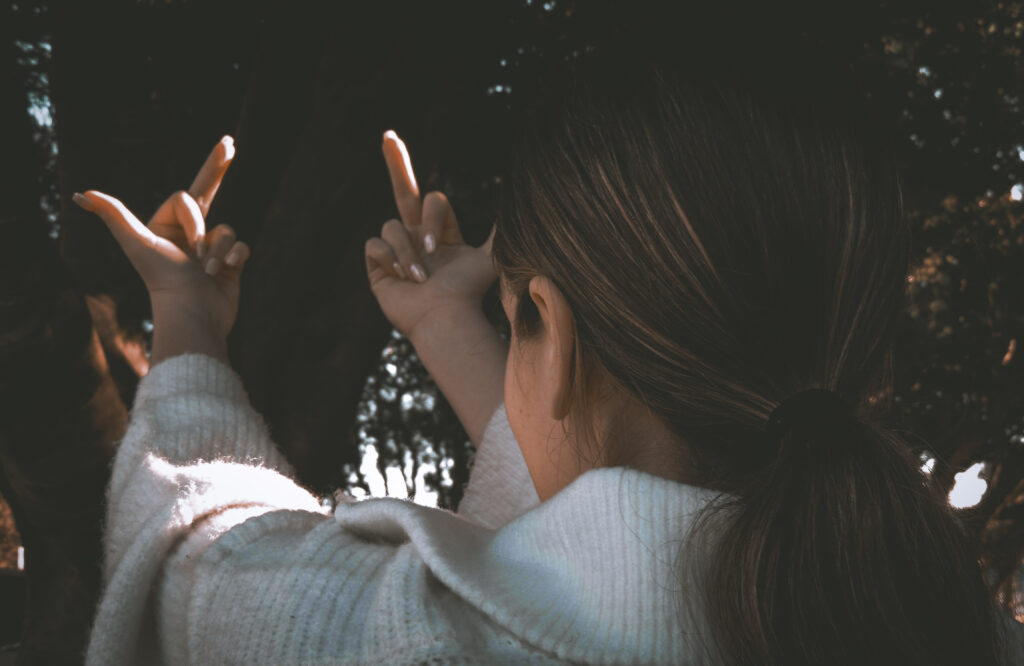
Feminism is not just a theory, it is something that we actively practice. This is according to professor Amanda Gouws, a distinguished professor of political science at Stellenbosch University. She believes that understanding gender inequality is only the first step. Feminism is about taking action to change it, she says. PHOTO: Nadia Swart

Her body
The earlier anecdote of Maritz being asked about future children while being interviewed for a job as a librarian illustrates the persistence of gendered biases in the workplace. For Gouws, these moments reflect how women’s bodies are policed in both institutional and intimate ways. She also believes that this is why the struggle over reproductive rights remains at the heart of feminism.
Gouws proudly positions herself as a radical feminist. The body of the woman is central to this philosophy and is often where many structural inequalities stem from, she says. Childbirth, access to maternity leave, childcare and gender-based violence are central concerns within the framework of radical feminism.
Access to contraception and safe abortion are issues that have extended from these central concerns, says Gouws. When equality is prioritised, a woman should have the freedom to not be penalised for becoming a mother, she explains.
Unfolding African feminism
The idea of a global “universal sisterhood” has often been celebrated in mainstream feminist movements, but this framing erases the realities of race, class and history. This is according to an academic article by professor Desiree Lewis, an academic in the department of women’s and gender studies at the University of the Western Cape.
In this article, Lewis argues that black and third-world feminists have reaffirmed the absence of homogeneity among women and rejected the simplistic call for universal sisterhood.
African feminism may draw on ideas from Western feminism, such as radical and liberal approaches, “but then [we] contextualise it for the context in which we live”, says Gouws.
“My inequality that I may experience, as a white middle-class woman, is not the same as the inequality of a black woman who lives in an informal settlement,” says Gouws.
African feminism engages with intersectionality by emphasising how race, class, poverty and access to resources shape women’s experience of inequality, says Bosch. Intersectionality involves both burdens and privileges, she says, highlighting that it is important not to essentialise groups.
Bosch says that understanding intersectionality requires one to consider broader structural and societal contexts. “The past laws and the current practices around racism, sexism and so on do continue to play into [women’s lives] every single day,” she says.
Workplace policies that fail to provide flexible arrangements often disadvantage women, especially those balancing childcare and work, says Bosch. Such policies also overlook men who carry caregiving responsibilities, she adds.
“We tend to essentialise [the idea] that all women have a difficult time. All women don’t have a difficult time,” she says. “Some women have a better time, economically, than some men.”
Feminism in motion
For many South African women, feminism shows up in the quietly persistent pursuit of fairness in everyday life: The woman who motivates her daughter to achieve anything she wants, or the businesswoman who mentors and employs other women. This is according to Shireen Motara, a proud African feminist and certified women’s empowerment coach in Langebaan, Western Cape.
Motara believes that there is no point in only living out feminist values in private, describing herself as an ‘everyday feminist’. In her work as a consultant and coach, she consciously employs women. At home, she raises her daughter in accordance with the feminist values of responsibility and freedom. She believes that feminism is a value system that one must live out privately and publicly.
“I can’t say I’m a feminist […] at home, but then when I’m at work, I allow men to be disrespectful,” she says.
Motara’s view echoes that of Bosch, who believes that feminism is lived out in the seemingly small moments of daily life.
“Everyday feminism, to me, is when you see something happening that is not right, [and] you actually have the courage to speak up and say that it shouldn’t be done,” says Bosch.
Bosch recalls a moment where she was driving with her young son and his friends. The children questioned whether girls should be able to study mathematics, simply repeating something that they had heard elsewhere. Bosch says that she made it clear that girls can, and should, pursue the subject.
“I try to do it in a way that doesn’t attack them, or antagonise them, or embarrass them, but just in a way that I can practically explain to them that, you know, there is another way of understanding life,” she says.
Bosch’s example highlights the miniscule situations in which feminism can unfold. This idea resonates with that of Gouws as well, though she describes it slightly differently. She calls it: “Living my feminism”.
Rebecca Davis, a senior journalist for Daily Maverick, says that she practices everyday feminism by making a point of using female experts as sources and mentoring younger women in the journalism industry.
“I think people are definitely scared to make sexist jokes around me, let’s put it like that. And that’s the way I like it,” she says.

GRAPHIC: Nadia Swart
Why gender is everyone’s business (whether you like it or not)
Everyday feminism cannot, however, exist in a vacuum. As Gouws points out, gender itself is political.
“Feminism […] is, by definition, a political project, right?” she says. “You cannot change inequality without finding political solutions.”
The question of politicised gender is entangled with power, says Ratele. It shapes whose voice gets heard, how struggles for equality are framed and whose rights are recognised, he believes.
In reference to the perceived politicisation of gender, Motara explains that gender discrimination is often covert. She says that patriarchy reveals itself subtly in places like boardrooms and workplaces.
In meetings and on boards, male colleagues would sometimes roll their eyes and mutter, Bosch says. “They would say: ‘Here comes the feminist’.” She knew speaking up might cost her friends or earn her labels in the workplace, yet she embraced the term proudly, she says.
However, women often internalise these patriarchal beliefs, Bosch explains. “The system makes it difficult for them to show up, so they accept that men […] have the power and men must make decisions for them,” she says. “That often holds them back from achieving their best. And, you know, advancing in life.”
Davis mentions that she often does corporate talks for overwhelmingly male audiences. “At the end of my speeches I like to say ‘I know that for many of you, this will be the longest you’ve ever let a woman talk without interrupting’.”
This statement is usually met with an uneasy laugh, she says. She does, however, stress that the message behind it is serious: Women in those spaces are frequently talked over by men and relegated to belittling tasks.

Equal to what?
“I think the issue of equality is misunderstood,” says Bosch.
Ratele notes that many South African men claim to believe in equality in principle, but the meaning often collapses when used in practice.
“If you ask men whether they believe in equality in this country, a large percentage – eight in ten – [say] they believe in equality,” he explains. “But when you ask them in the domain: ‘Do you believe that boys should do the dishes, the chores? Do you believe girls should do this?’, the numbers drop down.”
For Ratele, real equality infers fairness in its entirety. “If you believe in equality and fairness, you are a feminist,” he says.
“The most important work is inside the house,” says Bosch. Equality, then, is not merely a matter of policies, but of daily life. Who cooks? Who cleans? Who cares? Bosch believes that it is in these intimate spaces that patriarchy is either challenged or reinforced.
The concept of equality does not mean that everyone is the same and should live the same, she says. It is about ensuring that one group does not overpower the other.
Ending on her terms
Ultimately, feminism in everyday life is less about protests and more about choices, says Motara.
Bosch urges individuals to speak up when they witness wrongdoing. Gouws highlights that one should learn what feminism truly means in everyday life. Ratele believes that men should open themselves up to care and love, rather than mistaking equality for a threat.
And for Maritz, who once stayed quiet, it is about finding the strength to react differently today. Everyday feminism, then, is a practice. The practice of implementing fairness, care, equality and recognising that it starts at home.
The other half of equality
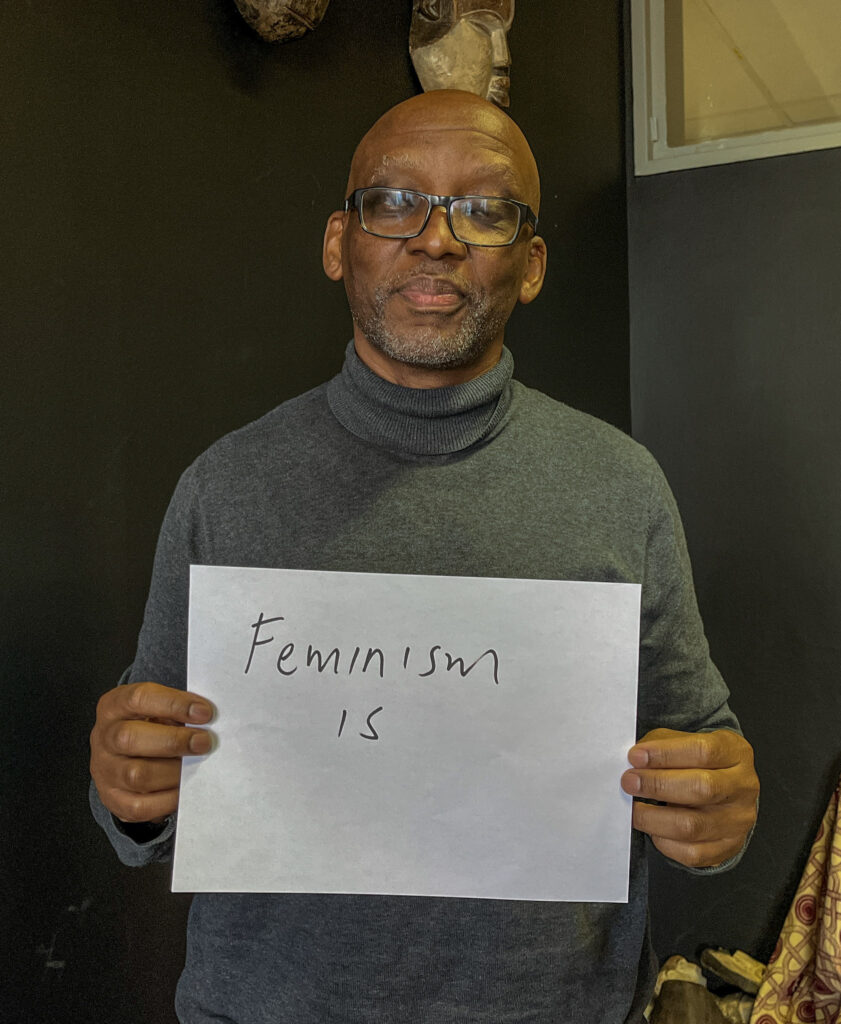
“Feminism is the belief of equality of sexes and genders.” This is according to professor Kopano Ratele, who specialises in critical men and masculinity studies within Stellenbosch University’s psychology department. He believes that everyone should be a feminist. PHOTO: Nadia Swart
Where feminism is often seen as women’s work, professor Kopano Ratele, who specialises in critical men and masculinity studies within Stellenbosch University’s psychology department, emphasises that men have a role to play as well. He is inclined to call himself pro-feminist, rather than a feminist, avoiding unnecessary debate around whether men are allowed to claim the latter label.
He believes a man can only come to support feminism when they confront the emotional scripts prescribed to them by the patriarchy. This narrow script makes one “ignore [the] large spectrum of your feelings and concentrate on only the anger”, he says. He asserts his belief that men engaging in feminism is only possible when men recognise their pain without excusing the harm they cause.
“I hope that [men] see that we bring equal value to the world and that we don’t have to justify our place in the world,” says Shireen Motara, a proud African feminist and certified women’s empowerment coach in Langebaan, Western Cape. “I don’t think that’s too much to ask.”