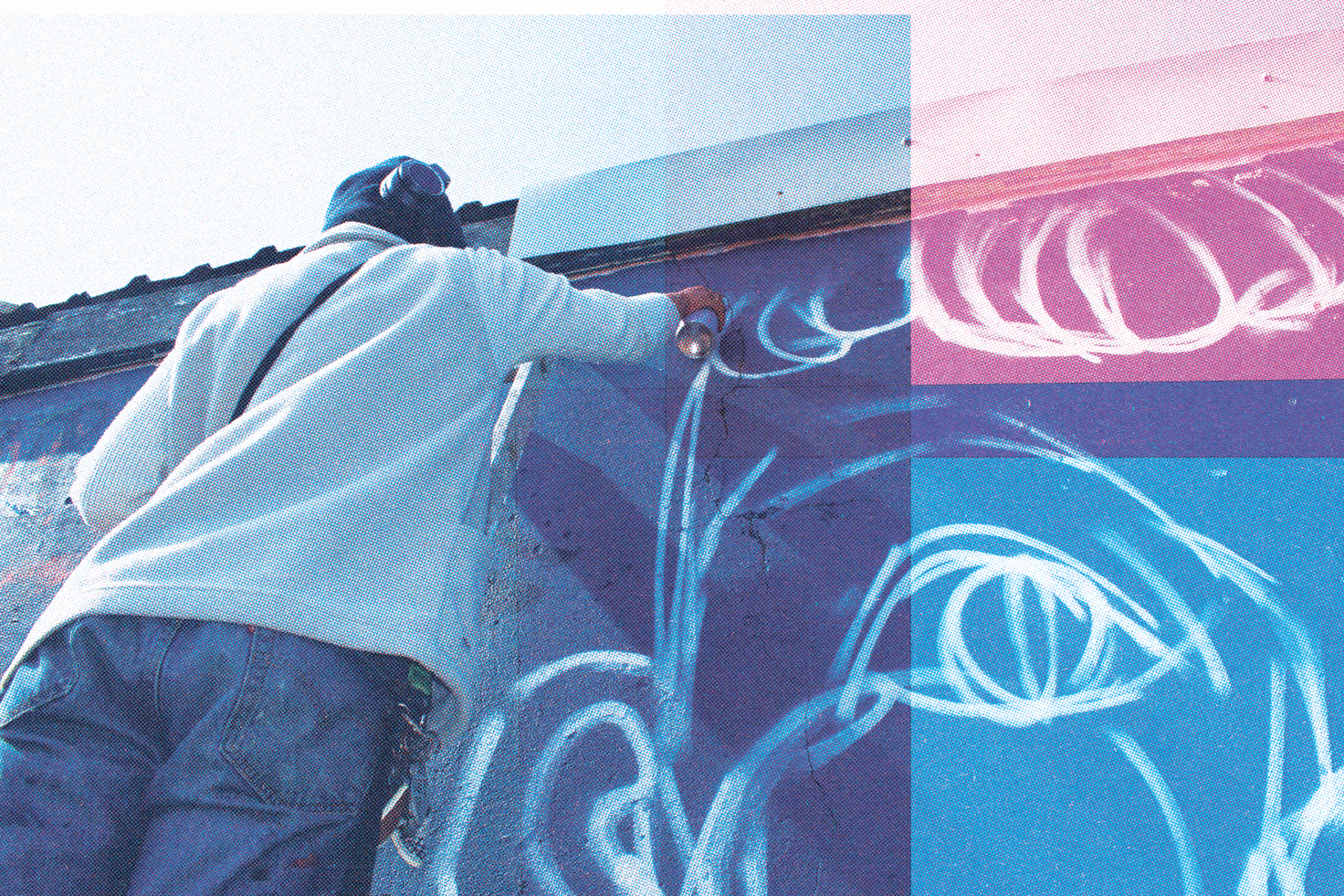
to etch, scratch or make a mark
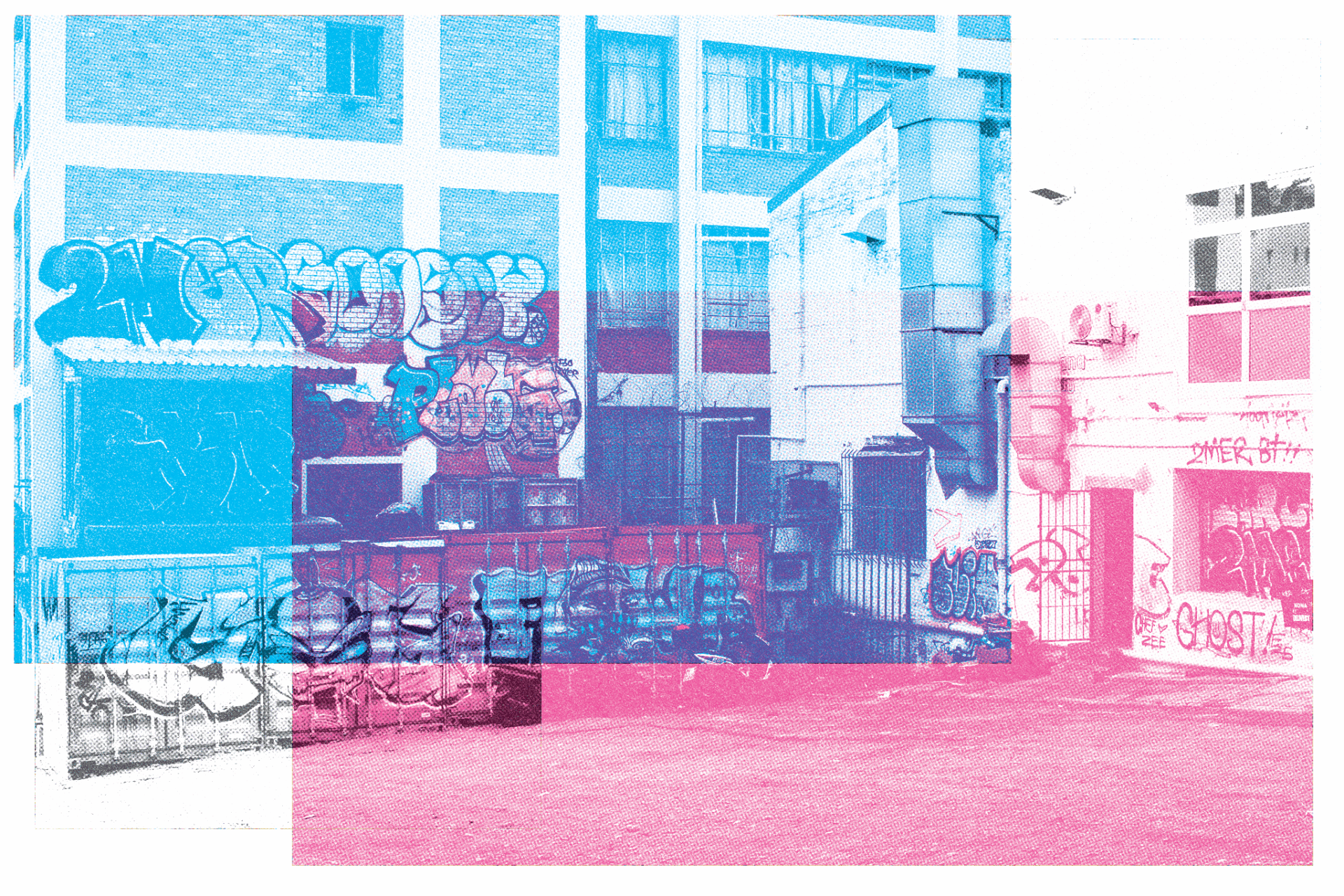
Graffiti may be outlawed in South Africa, but that has not stopped artists from turning blank walls into canvases. SMF uncovers how this underground art form continues to paint streets and amplify the voices of communities.
For Liesl Hermanus, graffiti documentation is a relatively new pursuit. Through her photography and video work, she draws viewers closer to the graffiti culture, while capturing spaces that remain unfamiliar to many.
She recalls a moment in Johannesburg, Gauteng, during a visit to the Everard Read gallery, a commercial space showcasing contemporary work from local artists. As she stood among artwork selling for no less than R10 000, her eyes drifted across the street to a graffiti tag. Next to it, sprayed boldly on the wall, were the words, “This is art too!”. Liesl was taken aback, she says.
On one side, canvases stood, carefully curated for a wealthy clientele. On the other hand, somebody had taken up a spray can to spread a simple message.
“Art can look different; it doesn’t have to look one specific way,” she says.
A pillar of hip-hop culture
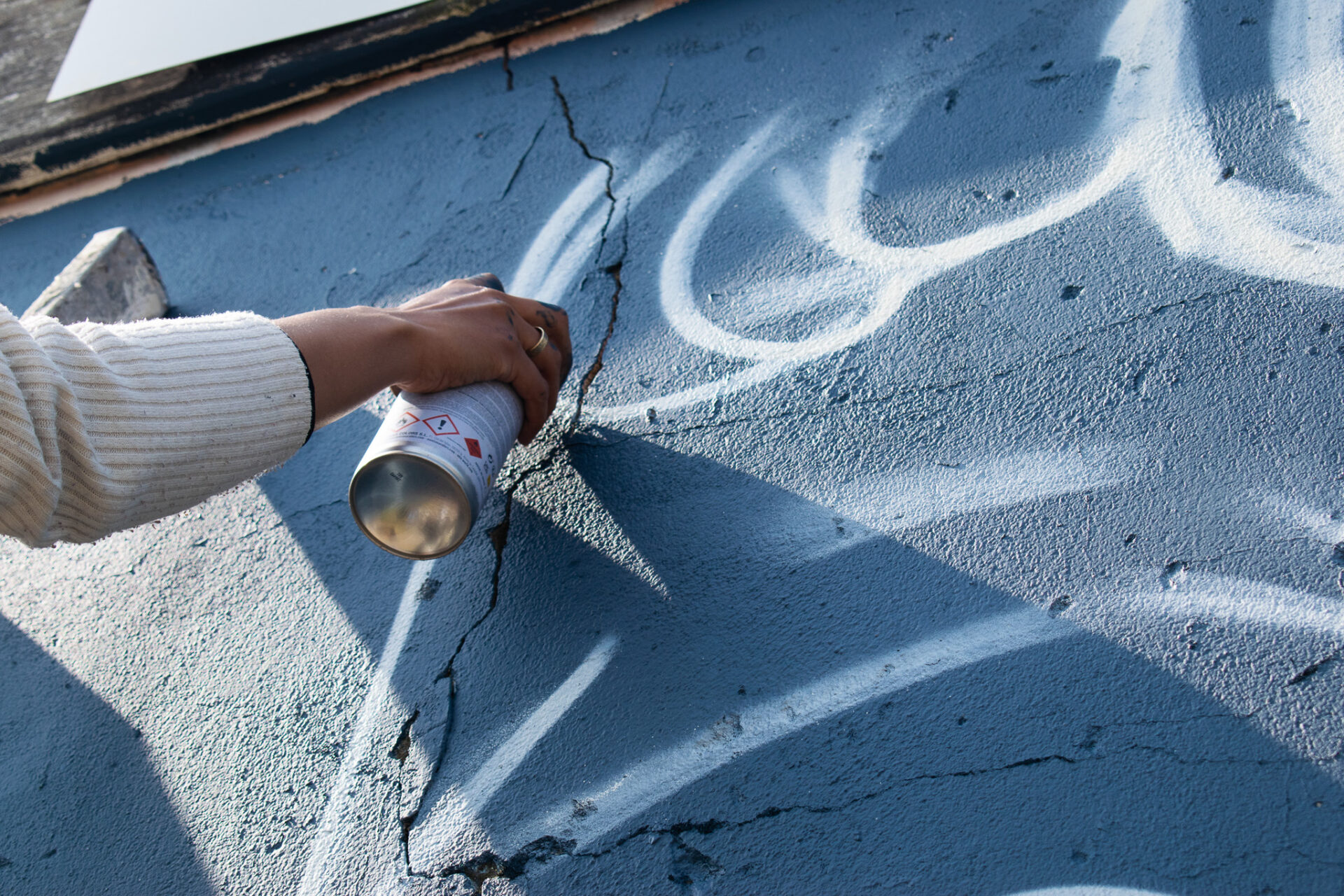
“Graffiti is an Italian word, a plural word,” explains Maxwell ‘Mak1One’ Southgate, a graffiti artist and teacher based in Cape Town. “The singular form of graffiti is graffito, meaning to etch, scratch or make a mark onto any surface.”
“So when you scuff your tekkies against the floor and it makes a mark, that’s graffiti. Now the word art comes behind it, so we make art out of those marks,” he says.
“So it’s graffiti art,” says Mak1One. “Graffiti art is an actual title within the hip-hop culture.”
Graffiti emerged in the late 20th century in New York, utilised by marginalised youth and minority groups to make their voices heard and to stand against social exclusion.
This is according to a journal article by Maggie Dickinson, an associate professor of Urban Studies at Queens College.
Graffiti is said to be one of the four foundational elements of hip-hop culture, explains Mak1One. “Hip-hop is a […] culture that transforms the world,” he says. “I’m just a participant or practitioner of it, just like you will practice Christianity or Zulu culture or any indigenous culture.” The four core elements within hip-hop include: The breakdancer, the DJ, the MC and the graffiti artist, he says. “Hip-hop is a certain way of thinking.”
“You come from an environment that’s rough and hip-hop shows you the diamond in the rough and how to find it, polish it and bring it to its full shine,” he says. He believes that hip-hop is “a spirit that came to save all the ghettos around the world”.
Mogamat Natheer Hoosain, known by his alias ‘Gogga de Devastator’, refers to himself as one of the “first great explorers” for graffiti in South Africa. “I was fortunate to be part of the broader construct. Not just graffiti, I mean, more part of the hip-hop culture.”
He discovered hip-hop culture during the early 80s, he says, recalling how he was first exposed to graffiti through watching music videos on VHS tapes at a friend’s house. In these music videos, there would be B-Boys, MCs and DJs, he says. Off to the side, barely noticed, a graffiti artist would spray a tag on a wall.
According to Gogga de Devastator, he would study these tapes after school, which led to him forming one of the first-known breakdance crews in Lentegeur. For Gogga de Devastator, his graffiti journey began in Viooljie Street, about 4km from Westridge, Mitchells Plain.
Risky business
Mak1One remembers how dangerous creating graffiti was under the apartheid regime. “It was really risky doing graffiti because it was put alongside political activism. It was put alongside gangsterism [and] marking territory,” he says.
“We were none of that. We were just trying to break free from the apartheid ways and just wanted to do the things we saw on TV or show the spirit that we have as youth,” says Mak1One.
In the years leading up to 1994, Mak1One noticed that there was more freedom for them to move into “whiter” middle-class areas and engage with artists of different backgrounds.
“When that happened, it allowed a lot of those kids with privileges to come into our hood and do a lot of stuff and then go back to their neighbourhoods,” says Mak1One. “[Since then,] it looks like a ghetto in their neighbourhood and people think that it is us coming there. So we got persecuted for that.”

Golden era
Chad ‘Bushy Wopp’ Hanning got into painting walls in 2005 at the age of 14.
“I’ve always seen graffiti on the way to school. I’ve always been around it,” he says. He began painting walls during the “golden era” of graffiti in South Africa, which was from 2000 to 2010, says Bushy Wopp. “At that point, there was graffiti everywhere. And I just wanted to be part of that community.”
According to Bushy Wopp, during this era, Westridge in Mitchells Plain was heralded as the “Mecca of graffiti”.
Artists would come in droves from all over the world, he claims. “I’ve seen people from Germany, from the States, from various places in Europe paint in Westridge,” he says.
Westridge was given this title as many veteran graffiti artists grew up in the area. Mak1One and a lot of other graffiti artists are from Westridge, according to Bushy Wopp.
“I lived in Westridge at the time as well. So I was exposed to all of that,” says Bushy Wopp.
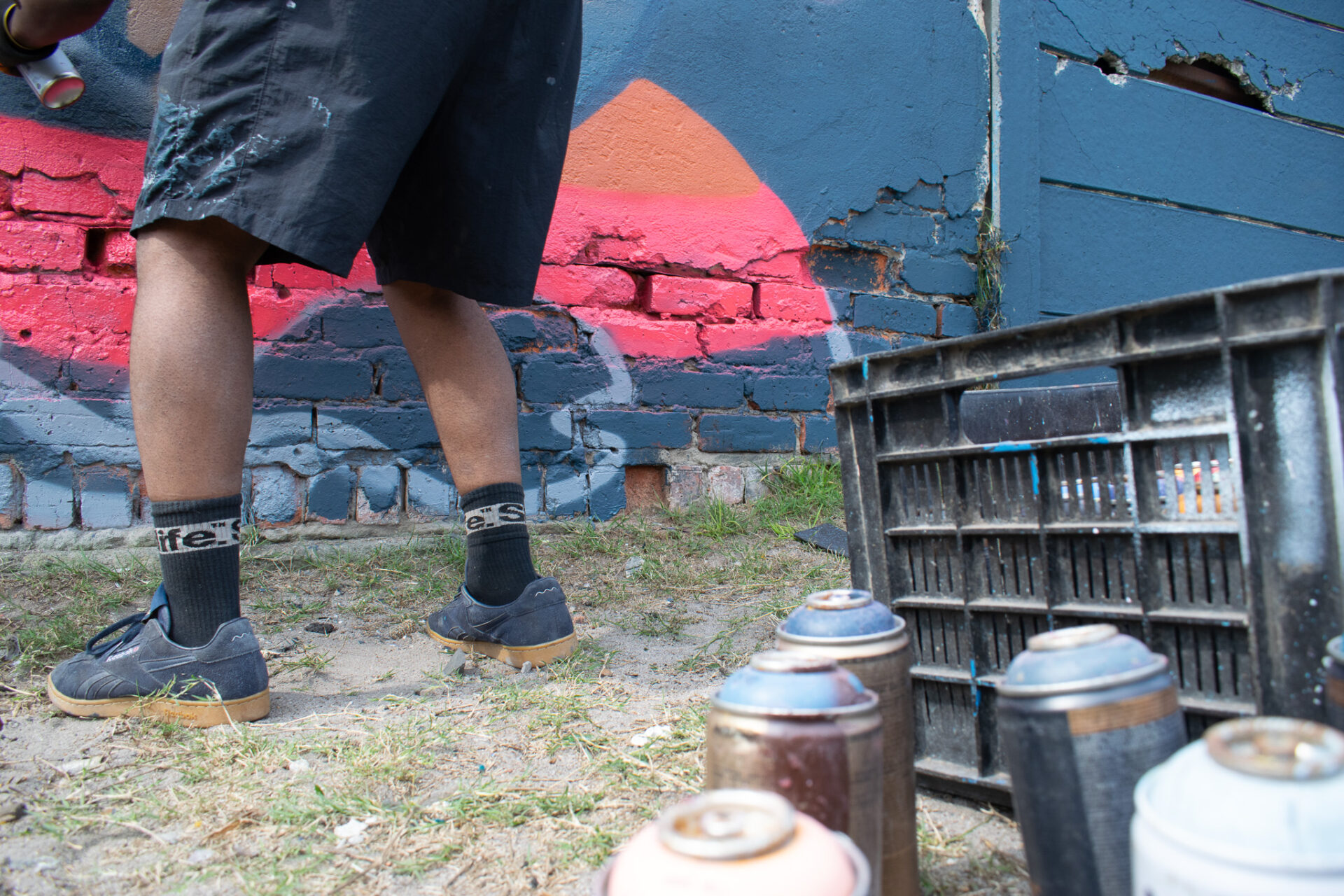
Graffiti artist Skubalisto spraying the outlines of his artwork. VIDEO: Jared Moorgas
Public nuisance
In the build-up to the 2010 FIFA World Cup in South Africa, the Democratic Alliance passed a graffiti by-law aiming to remove all gang-related graffiti in Cape Town. According to the by-law, the city declared the “existence of graffiti anywhere within its area of jurisdiction to be a public nuisance”.
“The issue with that was that they categorised mural art and graffiti art with gang graffiti,” says Bushy Wopp. “They covered up all of the graffiti, they covered up all of the murals, beautiful mural art, which is completely ridiculous.”
Your tag
Tagging is a form of graffiti. A tag refers to a writer’s pseudonym sprayed across any surface and allows artists to remain relatively anonymous. This is according to a journal article by Manfred Spocter, an associate professor of geography and environmental studies at Stellenbosch University.
When you are young and starting to do graffiti, you need a name, or tag, different from your own, says Bushy Wopp. “Graffiti is not always legal,” he says. His personal process for creating a tag was linked to his roots.
“When I was 14, I came up with Bushy because of our […] ancestry. So Bushman, Khoisan, it’s […] a nod to our ancestry,” he says.
For Mak1One, many of his graffiti tags would first be drawn on A4 paper.
“You draw the graffiti until you can afford a spray can or you steal a spray can,” he says. “That itch was there and you needed to [scratch it].”
Mak1One describes the process of putting up artwork, from A4 paper to a new surface, as “mind transforming”.
“You are not the same after that anymore,” he says.
‘Without expression, there’s depression’
“I think as humans, without expression, there’s depression. You know, like we have this innate need to express ourselves,” says Skumbuzo ‘Skubalisto’ Salman, a graffiti artist and muralist based in Cape Town.
Skubalisto believes that expressing yourself through conventional paintings often presents barriers regarding how your work is exhibited and in which spaces it can be shown. When tagging on a building in a public space, there is less restriction on what he can create, Skubalisto says.
Skubalisto’s main motivation is to create the kind of art he wished existed; work that others don’t make or see. “A lot of my work was primarily just positive black representation,” he says. “I just wanted to make works that celebrate our existence, you know, like that we shine a bright light on ourselves.”
Similarly to Skubalisto, Bushy Wopp focuses on themes that speak to his ethnicity. “Pro-coloured [voices], putting the coloured identity in a positive light,” he says. “Just being proud of where I come from and having our voices heard as well.”
Bushy Wopp expresses that he feels as though coloured people are generally portrayed as gangsters or thieves. “I feel like that’s why a lot of my work touches on coloured culture,” he says. “You’ll see most of my characters are brown-skinned.”
Not the easiest profession
“You don’t necessarily choose this, you know. Being an artist isn’t the easiest profession,” Skubalisto says.
He describes being an artist as a “gut-wrenching” profession. “There’s a lot of quiet suffering – you have to let go of a lot,” he says. “There’s times where I painted some of my favourite pieces, [I] come back and it’s gone the next day.”
For Bushy Wopp, suffering comes from the nature of what he does. “In normal circumstances, pieces don’t last in the open, […] that’s the nature of having work up in the streets. The streets change,” he says.


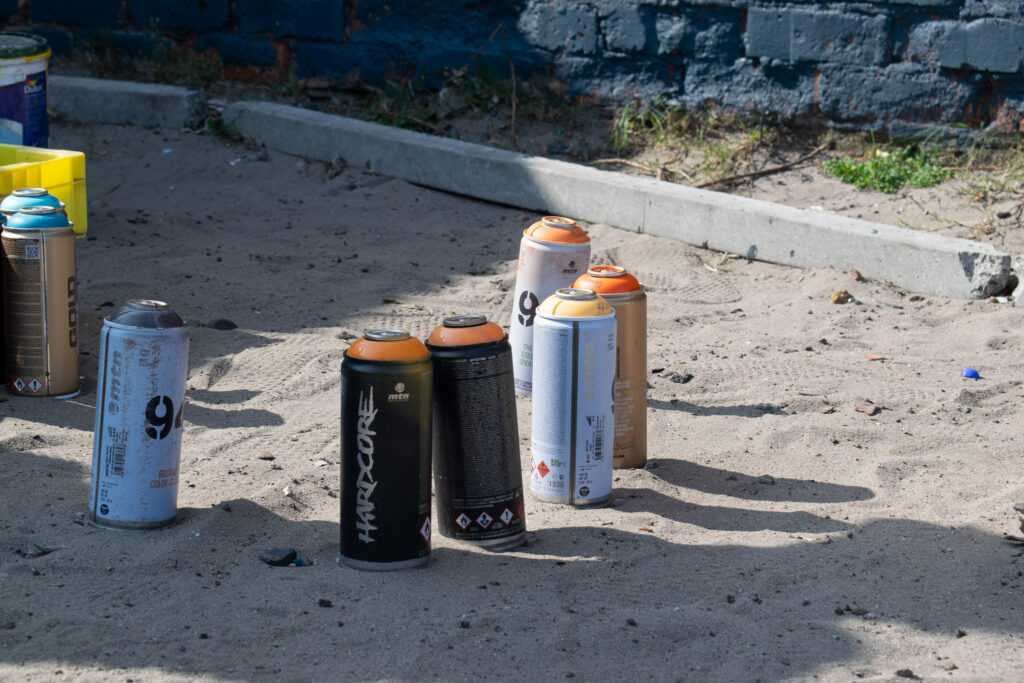
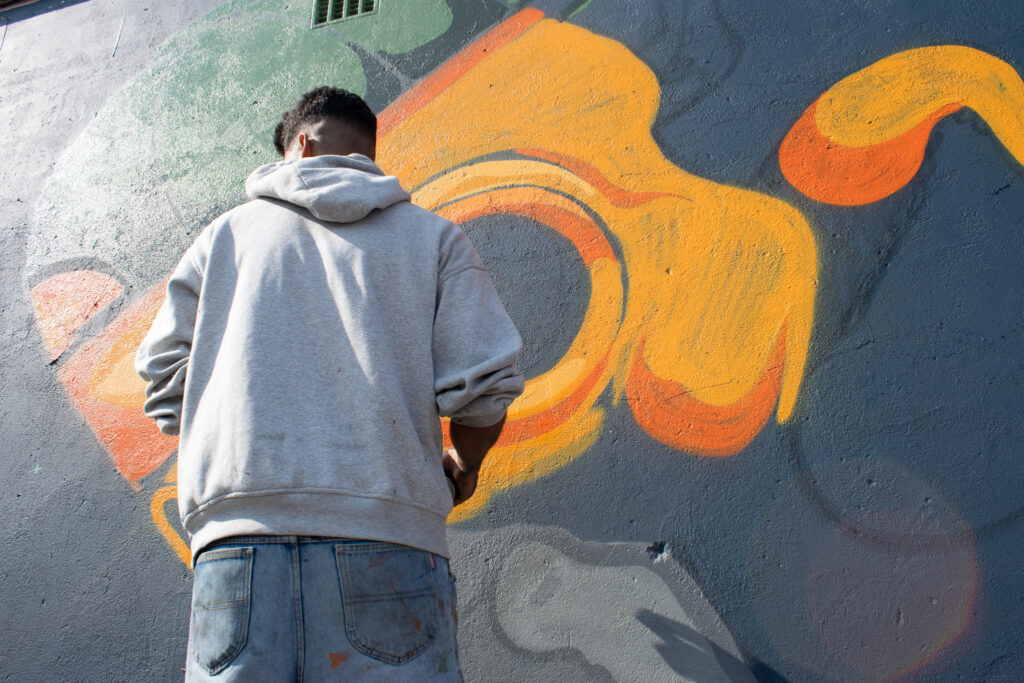
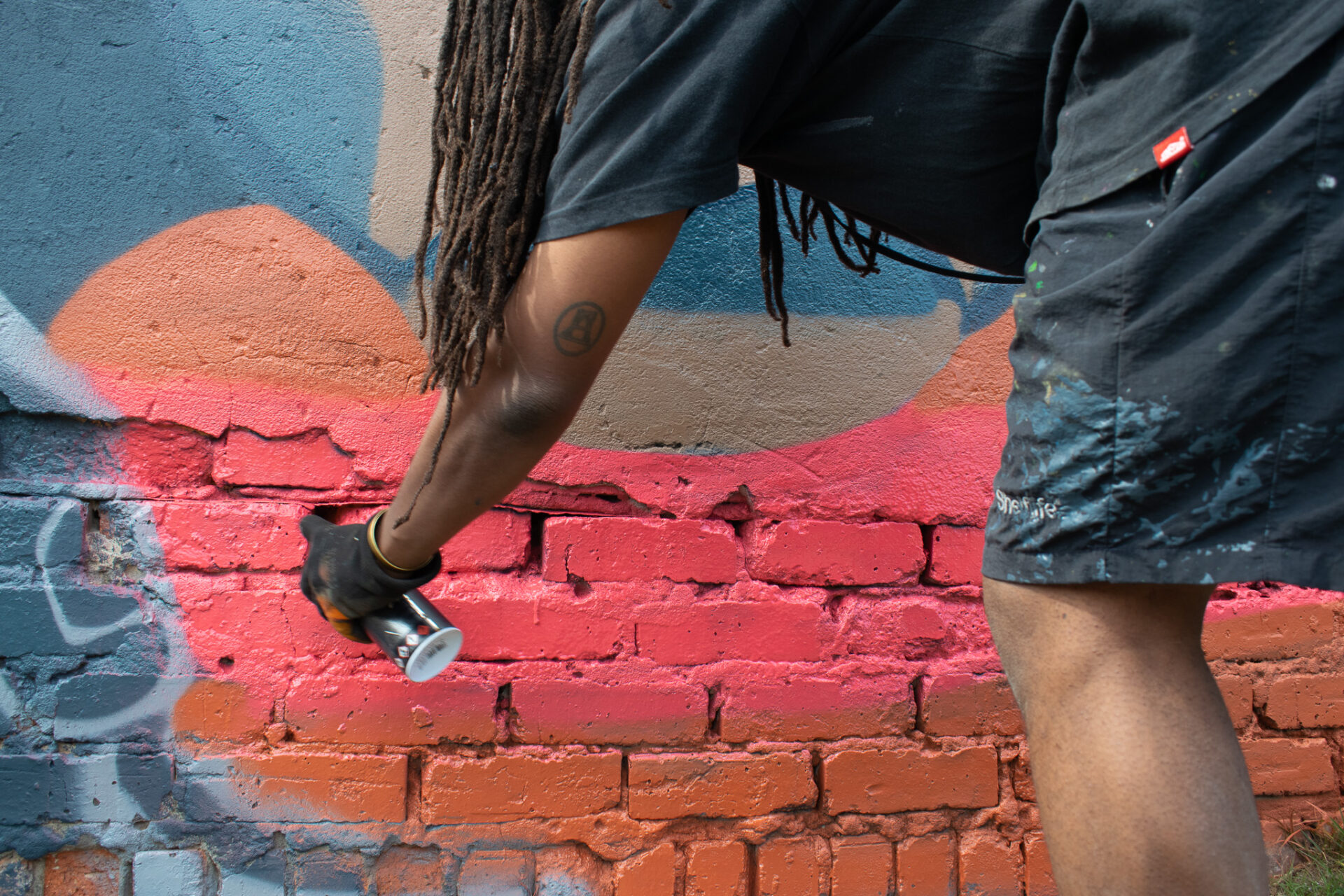
Graffiti artist, Aweh Migo, painting a mural. PHOTOS: Jared Moorgas
‘My work is very political’
“My work is very political, you know. It just is by nature,” Skubalisto says. “Just by painting black bodies on walls in a city like Cape Town. It’s already a political act.”
In 2024, Skubalisto painted a mural displaying Palestinian solidarity in Bo-Kaap, Cape Town.
The mural, he says, has closed creative doors for him. “There’s a lot of galleries that [don’t] really work with me as much as they did since then,” he says.
Despite this, Skubalisto believes that it is the duty of artists to create art for political commentary and social critique. “When [the] media can’t do anything or people’s jobs are at risk if they say something on Facebook […] I think it’s up to artists.”
He compares the work of artists to that of historians. “We capture a moment in time. [We] talk about things that people can’t necessarily talk about in an open platform,” he says.
Most of Skubalisto’s work is found in the Cape Flats, and he is often commissioned to create murals there, he says.
He says that one of the guarantees of painting a mural in public is that children will come around to view it. “It’s just really dope when kids come around and they see someone who looks like them, talks like them […] making something that they never pictured themselves making.”
Graffiti artist, Aweh Migo, painting a mural. VIDEO: Jared Moorgas
The fight for the visual landscape
There is a fight for the visual landscape that is currently being dominated by big corporations, Skubalisto says.
“You walk around and […] all you’re looking at are things reminding you what you don’t have, […] just soulless shit,” he says.
Skubalisto resists this messaging by creating art that comes from genuine introspection and conveys empathy. “That’s why I make my work in a lot of troubled areas because I try to leave plants or flowers or just good energy or good stories or historical relevance wherever I believe them [to be needed].”
Bushy Wopp always felt that there was power in leaving artwork behind. He adds that not only does he want to make visually stunning artwork for people, but also aims to “leave positive messages, […] just making a place feel better”.
To document
Hermanus, who is also a clinical services coordinator at the Perinatal Mental Health Project and a documentarian, first started engaging with graffiti artists during COVID.
It was during this time that a collective of artists under the name of Raak Wys (Get Wise) would go to certain areas and do murals, she says. Hermanus, at the time, got into contact with Nabeel Petersen, an artist and part of the collective. From there, she was slowly introduced to the graffiti space.
Going to “jams” became a frequent endeavour for Hermanus.
Hermanus recalls a particular “graffiti jam” in Hanover Park, where ten graffiti artists gathered to put up their art in the area. There, Hermanus was captivated by how the people in the community would come and engage with the artists. She describes these jams as a way of “activating and humanising spaces”.
“There’s something about being able to bear witness to that process, […] but also documenting it at the same time,” she says.