Contentious
ground
Contentious ground
Realising land reform goals has been a mostly slow and arduous process in South Africa. Land reform involves complex bureaucratic procedures, which are often hindered by a lack of coordination between government departments, says Dr Siphe Zantsi, an agricultural economist at the Agricultural Research Council (ARC). However, there has been progress, says Zantsi.
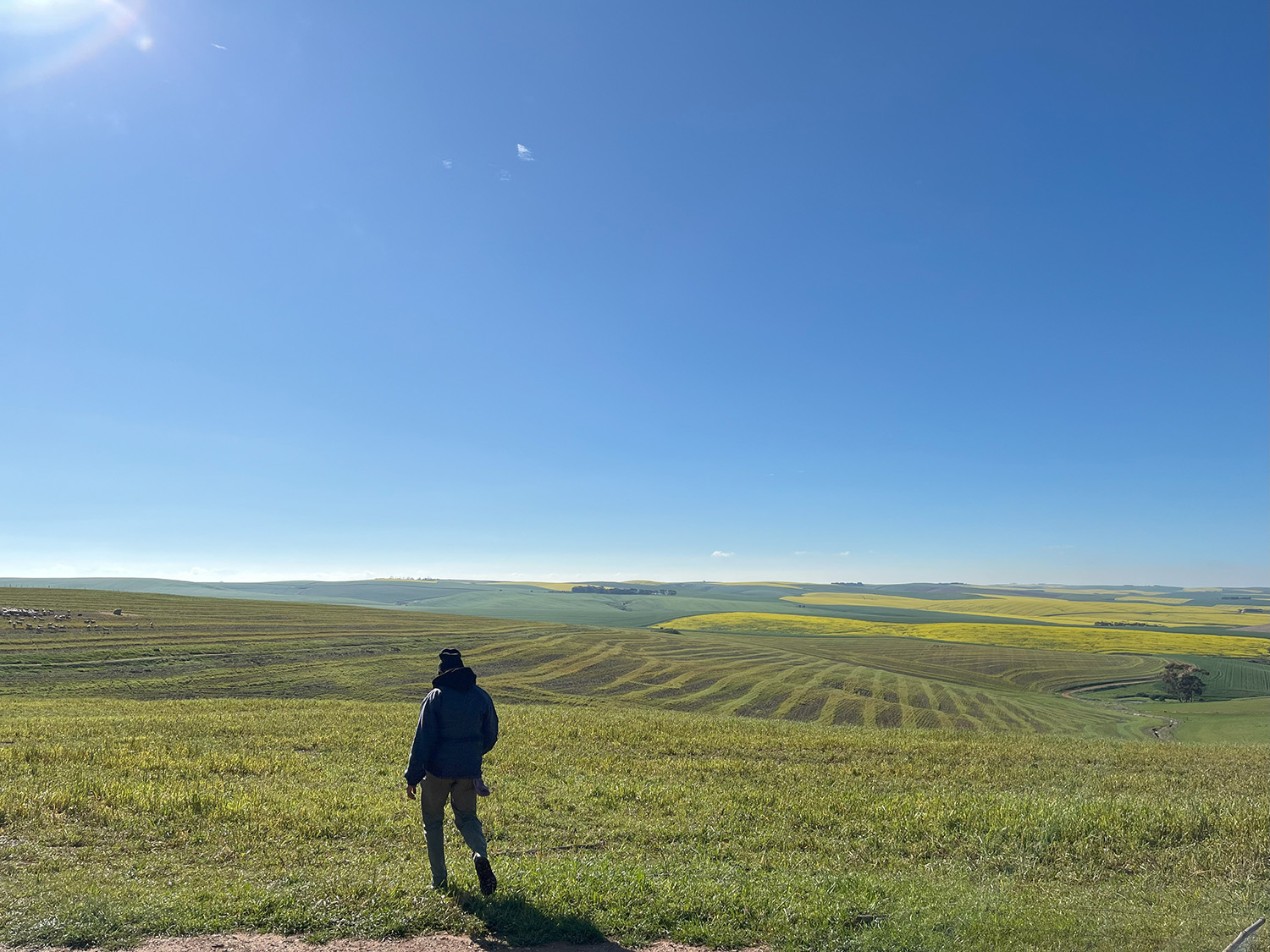
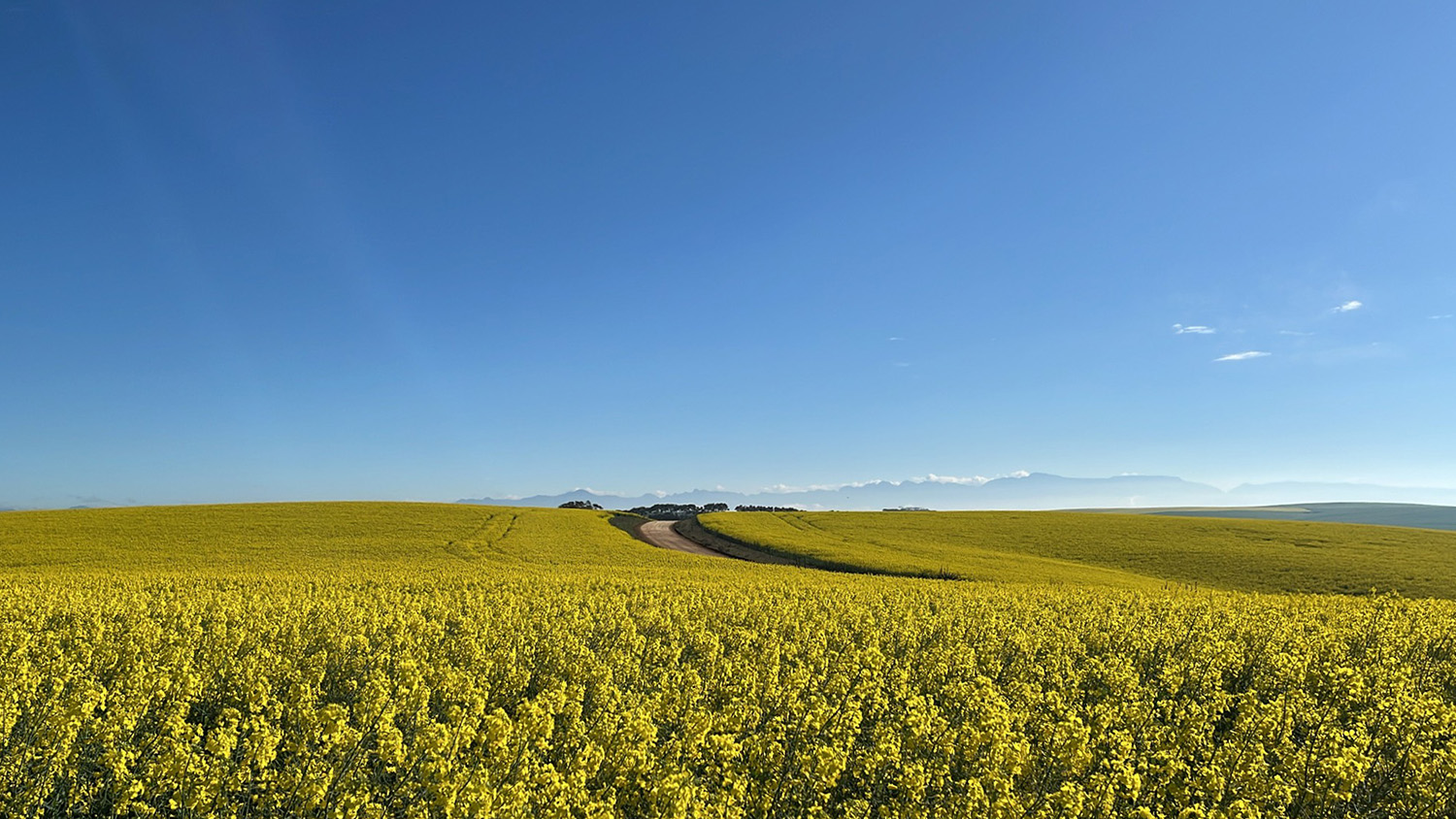
It is a sunny winter’s day in the Overberg, an area of contrasting natural wonders. This southernmost region of the Western Cape, beyond the city lights and Hottentot Holland mountain range, possesses an undeniable charm. With wheat and canola fields that stretch beyond the human eye’s reach, the Overberg is a true rural oasis.
A 4×4’s tyres crunch against the gravel as Antonio Vywer makes his Saturday rounds on Jafters Krantz, one of the many farms in the region. Vywer is only 24 and no stranger to farm life. Born and raised in Napier by his grandparents, he says that much of his childhood was spent on the farm that his grandfather worked on.
However, it was due to a land reform programme that his grandfather, and later Vywer himself, would come to hold shares in a company that owns farmland.
The Agri Dwala story
Agri Dwala is a farming company nestled in the Overberg region. The company is widely considered to be an example of successful land reform in the country.
Kosie van Zyl was born in Napier and grew up on Fairfield Farm, between the towns of Caledon and Napier. His family had been farm managers for four generations, he says.
“I was [raised] a bit more liberal,” says Van Zyl. “My best friends on the farm were the farm workers’ kids and when I went to school in grade 1, it was the first time that I was separated from my friends.” At the time, Van Zyl went to an all-white school in Napier.
After completing his studies in agriculture at Stellenbosch University (SU), Van Zyl found himself back at Fairfield in 1994. A year later, he got the opportunity to buy the neighboring farm – Hansieskloof.
According to Van Zyl, Callie Otto, the previous owner of Hansieskloof, did not have any children of his own and asked him whether he was interested in purchasing his farm. In addition to this, Otto loaned Van Zyl the money that would be needed. Within 10 years, Van Zyl was able to buy two more farms, he says.
“My wife and I said, ‘Wow, we are now commercial farmers because somebody gave us an opportunity’,” says Van Zyl.
It was out of this gesture of goodwill that Agri Dwala was born, he says.
“I would like to give somebody else the same opportunity that I had,” says Van Zyl.
“In 2006, we started Agri Dwala (Pty) Ltd with my farm workers and a few people [from] the community of Napier because we started on the commonage land of Napier,” says Van Zyl. “The municipality rented us the land.”
At the time, Van Zyl and Piet Blom, a UAP Crop Care agent for the Overberg region, each held a 15% share in Agri Dwala. This was in order to secure their production loan, says Van Zyl.
The remaining 70% went to the Agri Dwala Workers trust, which originally had 29 beneficiaries.
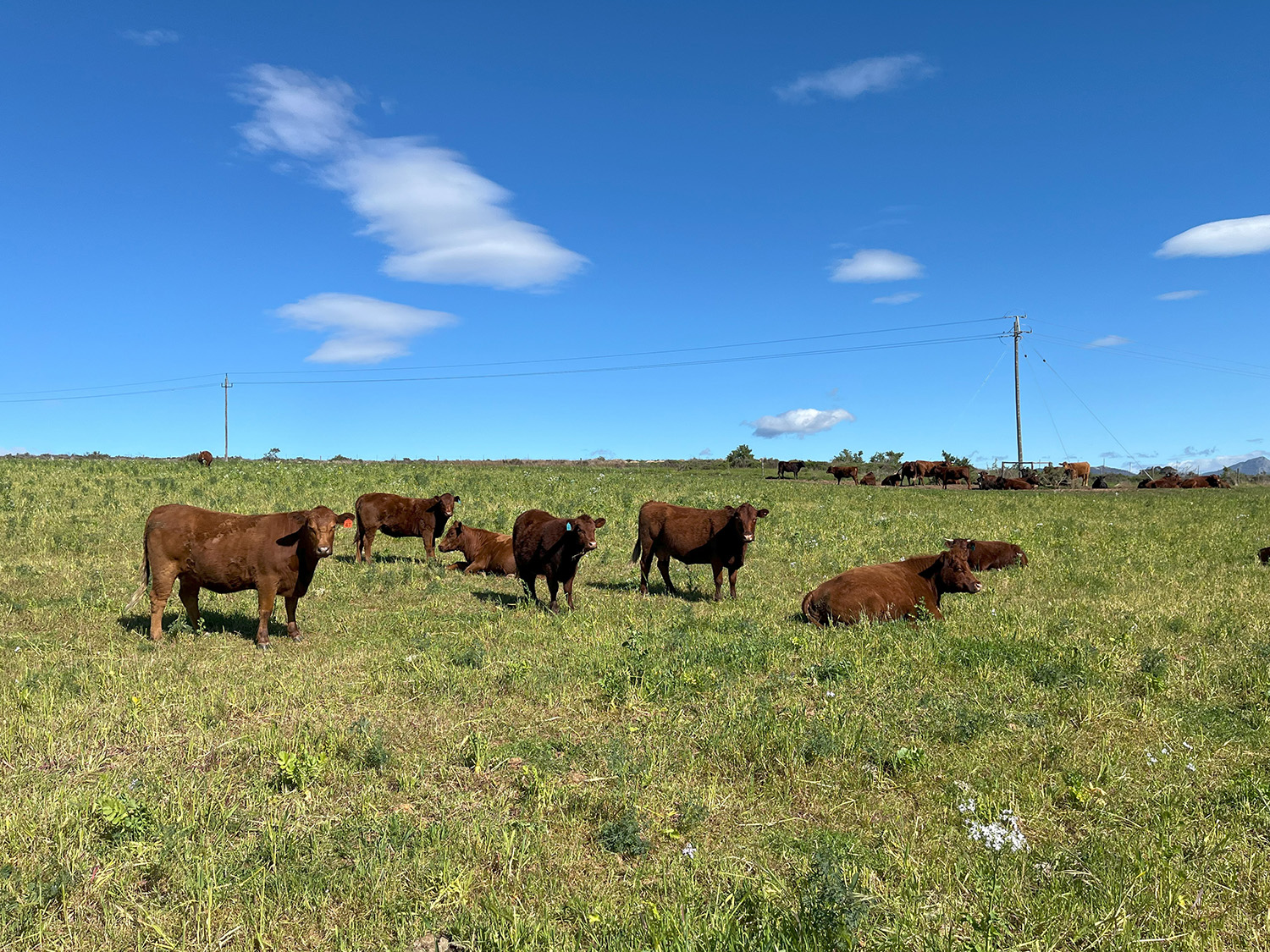
Antonio Vywer herding a flock of sheep in order to give them their feed. VIDEO: Hannah Abrahams
They made use of the Land Redistribution for Agricultural Development (LRAD) grant programme, says Van Zyl, wherein the government provided grants to previously disadvantaged people in order to buy assets for agricultural purposes.
Today, Agri Dwala is completely black-owned. The beneficiaries were able to buy both Van Zyl and Blom’s shares in 2016, according to Van Zyl.
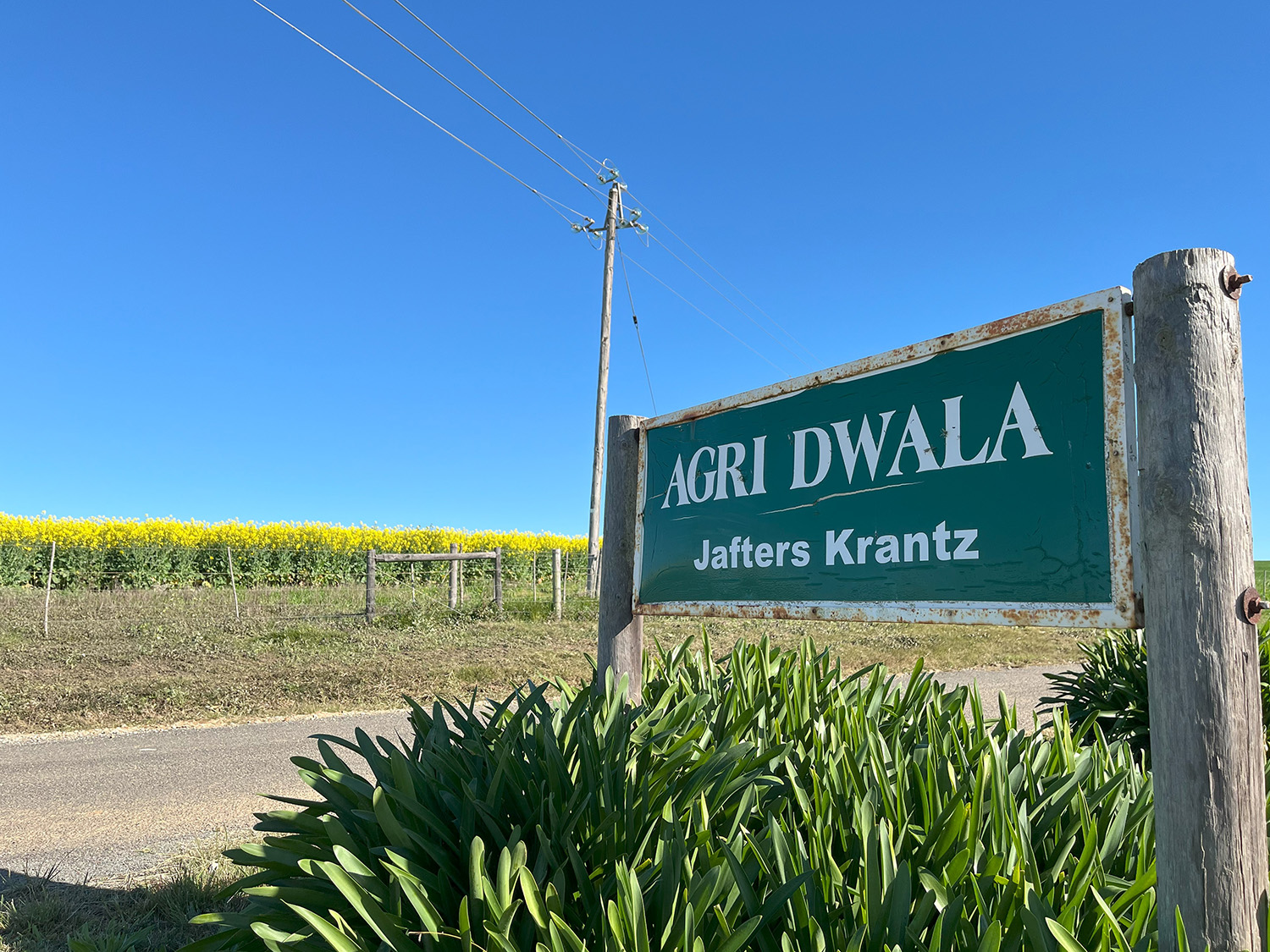
The company owns two farms of its own, Jafters Kranz and Karsrivier, says Vywer, who is the youngest director at Agri Dwala. The second farm was acquired with the financial help of Pioneer Foods, which is now a subsidiary of PepsiCo, says Van Zyl.
His grandfather, John Davids, was a farm worker and one of the founding members and original beneficiaries of Agri Dwala, says Vywer.
After his grandfather passed away in 2015, Vywer says that his share in Agri Dwala was left to him. After matriculating from Bredasdorp High School in 2020, Vywer first took a gap year and then spent a year in Stellenbosch studying sports management.
But during his return to Napier in 2022, after completing his course, he was asked whether he wanted to start working on the Agri Dwala farmland, says Vywer.
This only seemed natural, says Vywer, as he had spent many school holidays on the farm with his grandfather.

Part of Antonio’s duties involves making sure the sheep at Jafters Krantz get their feed. PHOTO: Hannah Abrahams
History informs the present
Understanding the need for land reform in South Africa requires an understanding of the country’s history, says Dr Siphe Zantsi, agricultural economist at the Agricultural Research Council (ARC).
According to Zantsi, there are two important pieces of legislation that inform the basis for understanding why land reform is necessary.
The first is the 1913 Natives Land Act, which was later updated in 1936.
“They stipulated that 87% of the country would be occupied by whites and natives would occupy the remaining 13%,” says Zantsi, in reference to the 1936 legislation.
But there was no form of title deed that gave black people ownership over the land where they were allowed to live, says Zantsi.
“The land [belonged] to the government, but traditional leaders would be custodians of that land,” he says.
According to Zantsi, black people were given what was called “Permission to Occupy” instead of title deeds. This law ensured that they could not secure tenure or simply did not have the right to own property.
The second important piece of legislation, according to Zantsi, was the Bantu Homelands Citizenship Act of 1970, which effectively made black people citizens of their respective homelands.
“If you look at the structure of the country, Xhosas are in one place, Vendas are in one place, Basotho are in one place. That wasn’t naturally created in South Africa, it was forcefully created,” he says.
The mammoth task left for the post-apartheid government was the improvement of agriculture in the former homelands, says Zantsi.
“There were commissions that were delegated by the government,” he says. “One of them was the Tomlinson [Report] – it found that in the former homelands the land is too small to make a living… no one can derive a livelihood from the land.”
Zantsi explains that there are effectively three pillars of land reform policy in South Africa, as laid out in the 1997 White Paper on South African Land Policy. These are: land restitution, which aims to restore land that was forcefully taken; tenure reform, which seeks to provide security to farm workers and dwellers; and lastly land redistribution, which aims to correct the skewed ownership of land along racial lines.
“The fact is that whites still own most of the agricultural land,” says Zantsi.
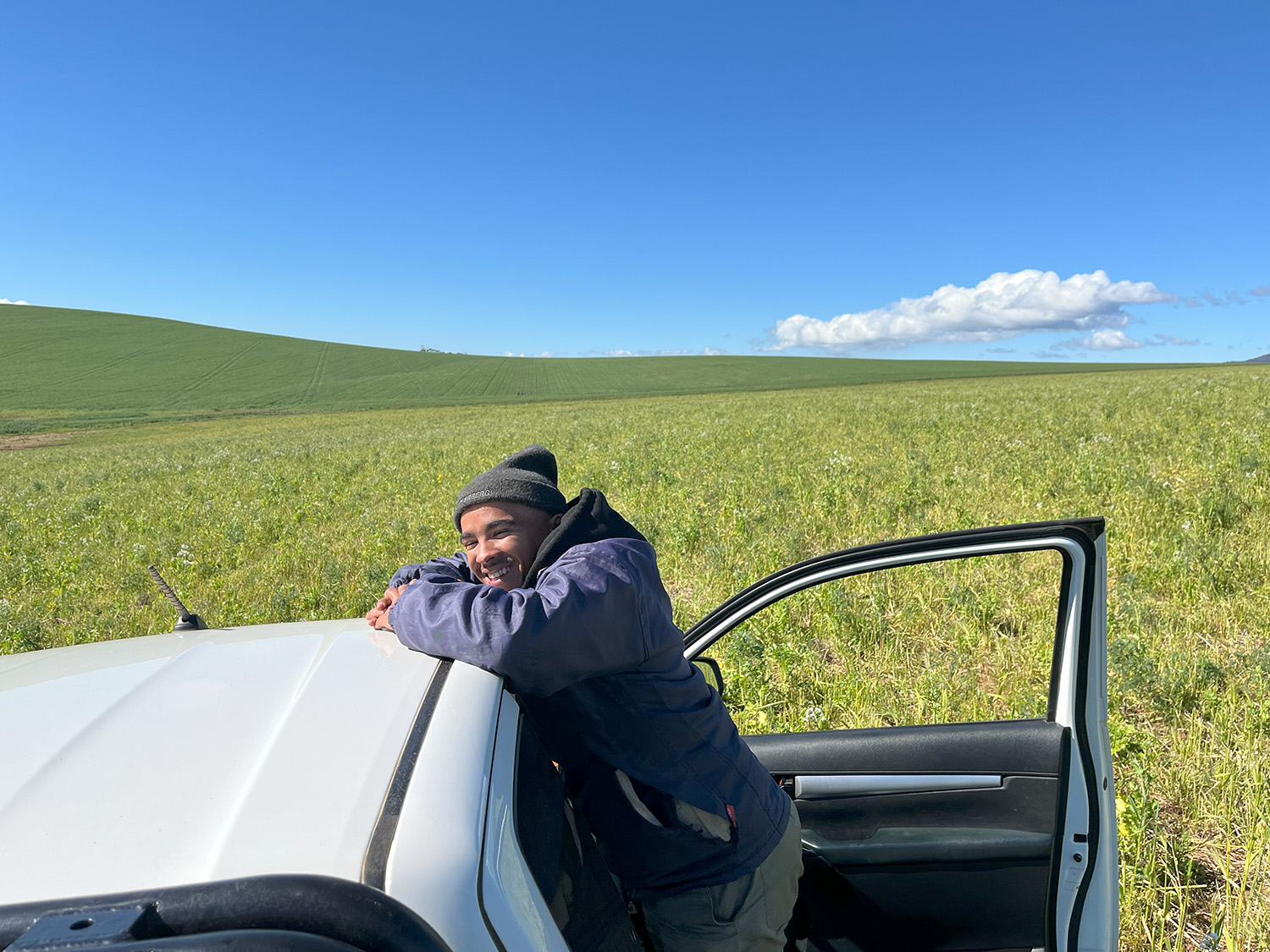

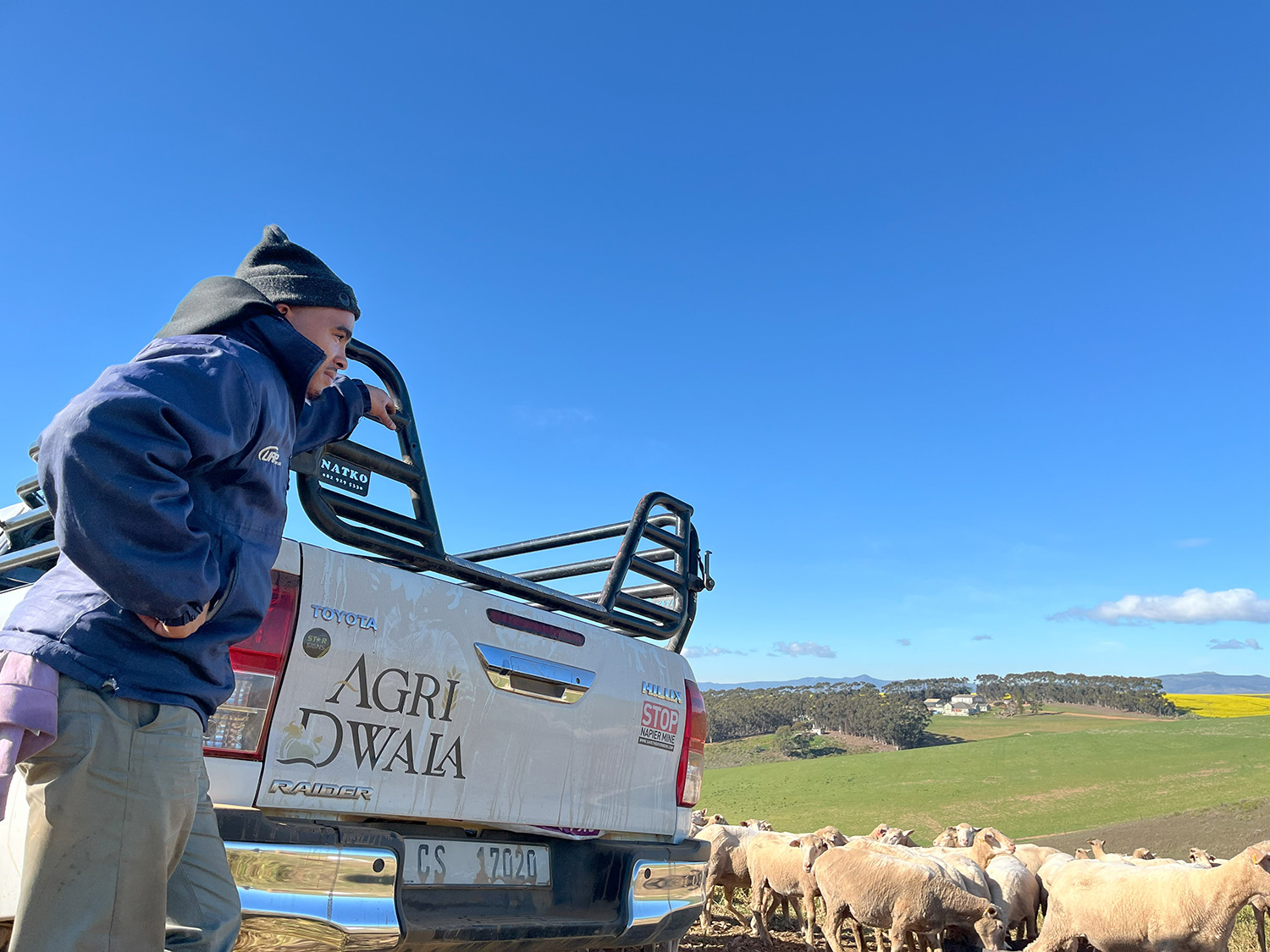
Antonio Vywer, 24, started working on Agri Dwala’s farmland in 2022. He is currently the youngest director at Agri Dwala. PHOTOS: Hannah Abrahams
A long way to go
While farmland ownership is still skewed along racial lines, there are numerous laws and government programmes in place to ensure equitable redistribution of land, says Zantsi.
Zantsi acknowledges that while extensive land reform legislation exists, the issues that continue to arise are linked to the poor implementation thereof and a lack of capacity within the government.
“In terms of capacity, I’m not talking about the numbers only, but the expertise,” says Zantsi. “And then, also, if you look at the structure of implementing land reform, you will find that there is no coordination between government departments.”
Furthermore, a piece of legislation does not achieve anything on its own, says professor Johann Kirsten, director of the Bureau for Economic Research at SU.
“Legislation only creates a framework and a legal frame for the plan of action and also then allows budget to be allocated to the specific law and its implementation,” he says.
There are a wide range of factors that contribute to the inefficiency of South Africa’s land reform process, including incompetency and corruption, according to Kirsten.
“One can say that because of the systemic problems of the land reform process, we have set up black farmers to fail,” says Kirsten.
Farming is also a tough business, says Willem de Chavonnes Vrugt, a livestock farmer from the North West and vice president of AgriSA, an organisation that represents farmers’ interests in South Africa.
“The reality is that not all businesses make it in the long run,” says De Chavonnes Vrugt. “It’s just the nature of the free market and that the free market discriminates against how productive you are.”
Furthermore, much more than a piece of land is needed.
“Land is one part of the puzzle,” says Kirsten. “If you don’t have expertise, capital, labour, inputs, the land is not going to produce anything.”
While Zantsi acknowledges that land reform is not where it should be, he is optimistic.
“I think we are still far behind, but I’m optimistic that we have the right policies in place […] it’s not going to be a simple thing, you know, because farming is not really an easy profession,” he says.
Sufficient legislation seeking to address land reform issues already exists, with at least 16 laws related to farmland restitution and redistribution.
This is according to an article by Kirsten and Wandile Sihlobo, chief economist at the Agricultural Business Chamber of South Africa.
In 1994, SA’s total farmland with title deeds, thus owned solely by white farmers, amounted to 77.5 million hectares, according to Sihlobo and Kirsten.
They argue that since 1994, the government has addressed a quarter of the total farmland in the country which it set out to redistribute. Their research suggests that 19.5 million hectares of land has been restored through the various government programmes.
Furthermore, 2.5 million hectares of land acquired since 2006 are currently owned by the state in the State Land Holding Account, which the government has been slow to redistribute, says Kirsten.
“The landholding account was formed back in the 60s and the 70s when they acquired land from white farmers to enlarge the former homeland areas,” says Kirsten. “Then the state formed a Land Holding Account, whereby the land was then given to communities, but it’s state land.”
In 2006, the Proactive Land Acquisition Strategy (PLAS) was implemented, whereby the government acquired land on the open market and put it into the same Land Holding Account, according to Kirsten.
“But these new farms, the 2.5 million hectares that were acquired since 2006, are all well-listed and they are all defined as Proactive Land Acquisition [Strategy] farms […] they are rented out or leased out to farmers,” says Kirsten.
However, leases to farms in this account are not guaranteed, are not long term and there is no possibility of farmers acquiring a title deed to the land, according to Kirsten.
De Chavonnes Vrugt echoes his frustrations with the Land Holdings Account.
“What saddens me is that then you’ll find that there might be properties close by that [are] sitting in this Land Holdings Account that can bring a solution for everybody involved,” he says.
Back in the Overberg, the community took ownership of the land reform process themselves. Vywer believes his grandfather would be pleased to know he is working on the farm today.
“I think he would be proud of me today… About everything I’ve achieved so far,” he says.
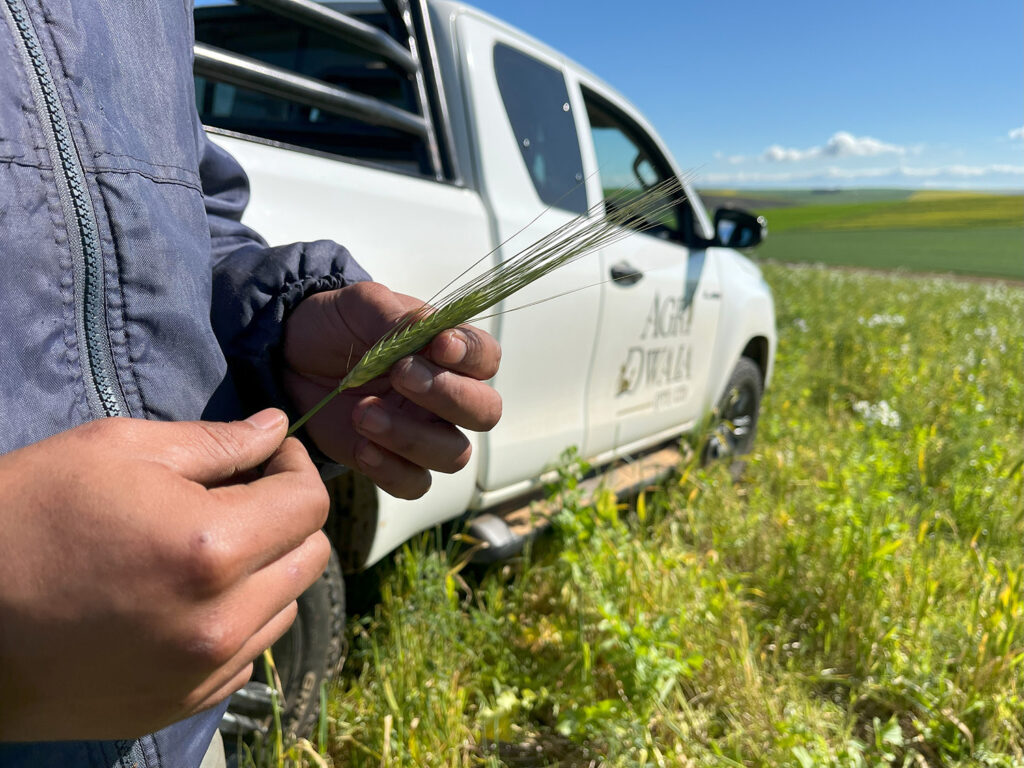
Grain farming is the main source of income for many farmers in the Overberg region. PHOTO: Hannah Abrahams