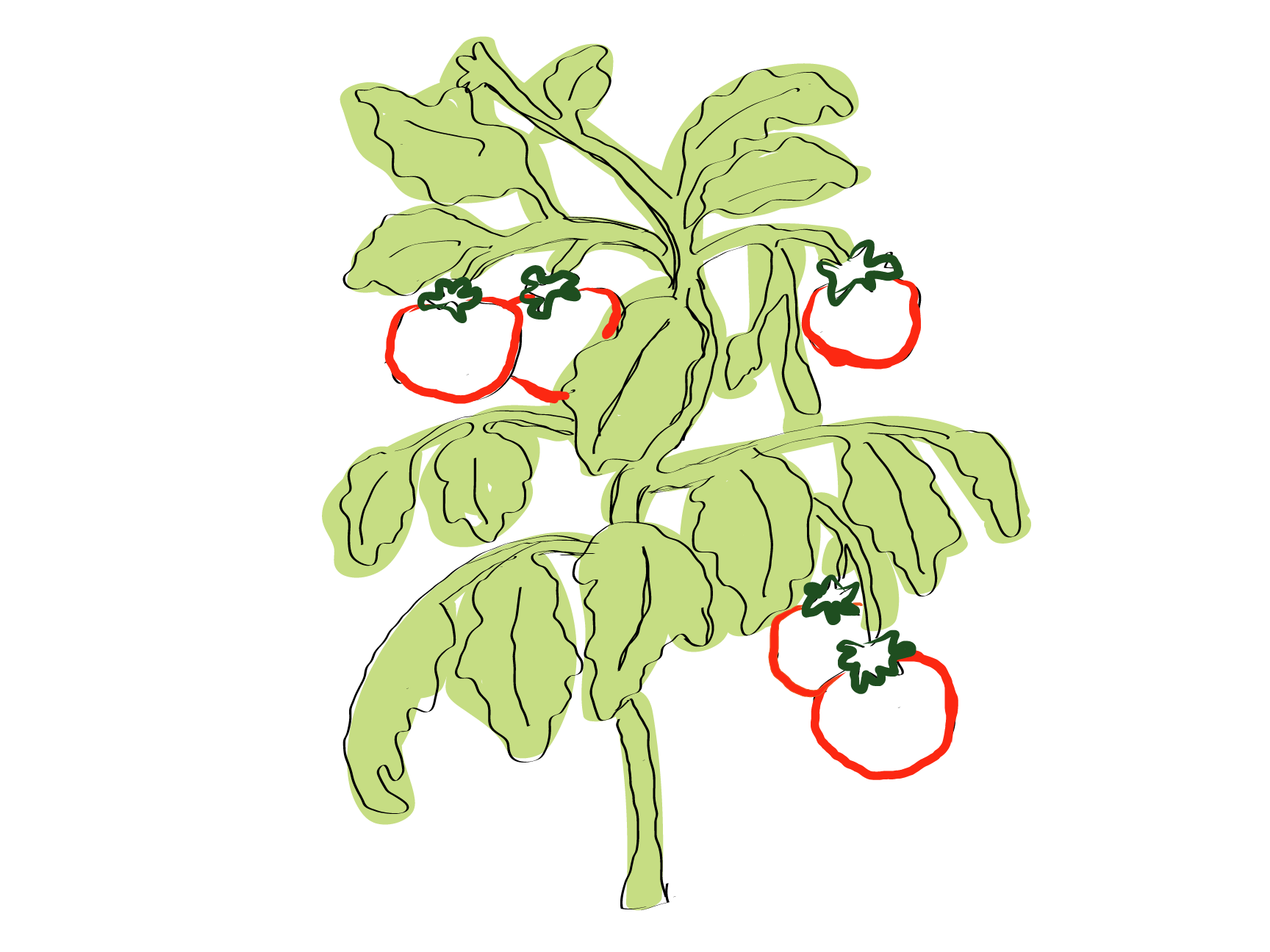
GRAPHIC: Daniela Botha
SEEDS OF CHANGE
From the spinach beds of Kayamandi to the compost piles of Johannesburg, South African communities are redefining what it means to live active public lives. Grassroots farmers are turning neglected spaces into hubs of food security and employment for their communities, planting not only vegetables, but seeds of resilience and community pride.
On a sunny morning in Kayamandi, Stellenbosch, Simlindile Patekile, director of Imveli Farm, bends down to inspect his spinach seedlings. For Patekile, farming is not just about the food, but about reclaiming dignity, legacy and opportunity.
“I grew up in the Eastern Cape,” says Patekile. “My father [taught] me farming skills.”
Patekile moved to Kayamandi in 2002 and saw a gap.
“Nobody [was] farming close to our community,” he says. “It will be easy for people to come walk and buy from us.” For Patekile, the need was clear: To create access to fresh, local produce while building a sense of pride and self-sufficiency within Kayamandi.
Elsewhere in Cape Town, the motivation was different.
What began as an emergency food parcel initiative during the Covid-19 pandemic grew to last, in the form of an enduring permaculture project. This is according to Mandy Leibbrandt, founder of the Suikerbossie Park community garden in Cape Town.
This was one of many urban farms and gardens born out of crisis at the time, after tourism collapsed and locals sought food security, she says.
According to Leibbrandt, the garden not only provided this security, but also transformed an abandoned park into a neighbourhood hub.
From eco-anxiety to collective action

GRAPHIC: Daniela Botha
Urban greening is both a climate response and a cultural shift, says Ephraim Ozabor, senior campaign manager at Greenpop, a Cape Town-based non-profit organisation (NPO) that focuses on restoring ecosystems.
“At Greenpop, we believe in rolling up our sleeves and doing something real in the face of the biodiversity and climate crises,” he says.
Eco-anxiety is the term used to describe the “psychological impacts of environmental problems”, says Dr Panu Pihkala in a textbook for university students.
The impact is often so intense that the anxiety paralyses people and hinders sustainability efforts, he writes.
Tree planting and urban greening initiatives empower citizens to get active instead of anxious, says Ozabor.
“Beyond the practical impact, involvement offers individuals a sense of agency, transforming eco-anxiety into tangible action and creating a legacy of greener, more resilient spaces,” he says.
Research supports this link between environmental action and community wellbeing. A 2024 academic article by Meiyi Li and colleagues argues that urban agriculture can reduce emotional vulnerability to climate change by building social networks and promoting sustainable land use.
By converting anxiety into agency, communities are growing food and also cultivating resilience, according to Li and colleagues.
Farming for food and future generations
In Kayamandi, Imveli Farm demonstrates how grassroots initiatives confront both hunger and history. Co-founded by Patekile and his colleague, Mlondolozi Mnxeba, the farm operates on land that provides a source of food and also a chance for the community to learn new skills.
However, access to land remains a struggle for this farming duo.
“The issue of land is more political here in Stellenbosch,” says Patekile. “Our skin colour is a barrier to [getting] land. If we can get more we [would] hire more people in our community.”
School learners from the community often visit the farm to gain practical knowledge. They are taught that farming is not easy, that it is hard work. Patekile and Mnxeba focus on continuing the legacy of their fathers by “working with nature, the same as our forefathers […] did”, says Patekile.
Other grassroots gardens echo this generational vision. Leibbrandt says that their once-abandoned public park is now “the little heartbeat of Protea Village”, where Suikerbossie Park community garden is located.
This is where neighbours gather, children play and even vulnerable residents, including one of the neighbours – a deaf-mute man – find both purpose and employment through gardening.
Bruce Beyer, who is the co-creator of the Woodstock Peace Garden, describes it as “a paradise” co-created with a school and community to reclaim neglected land and spark awareness.
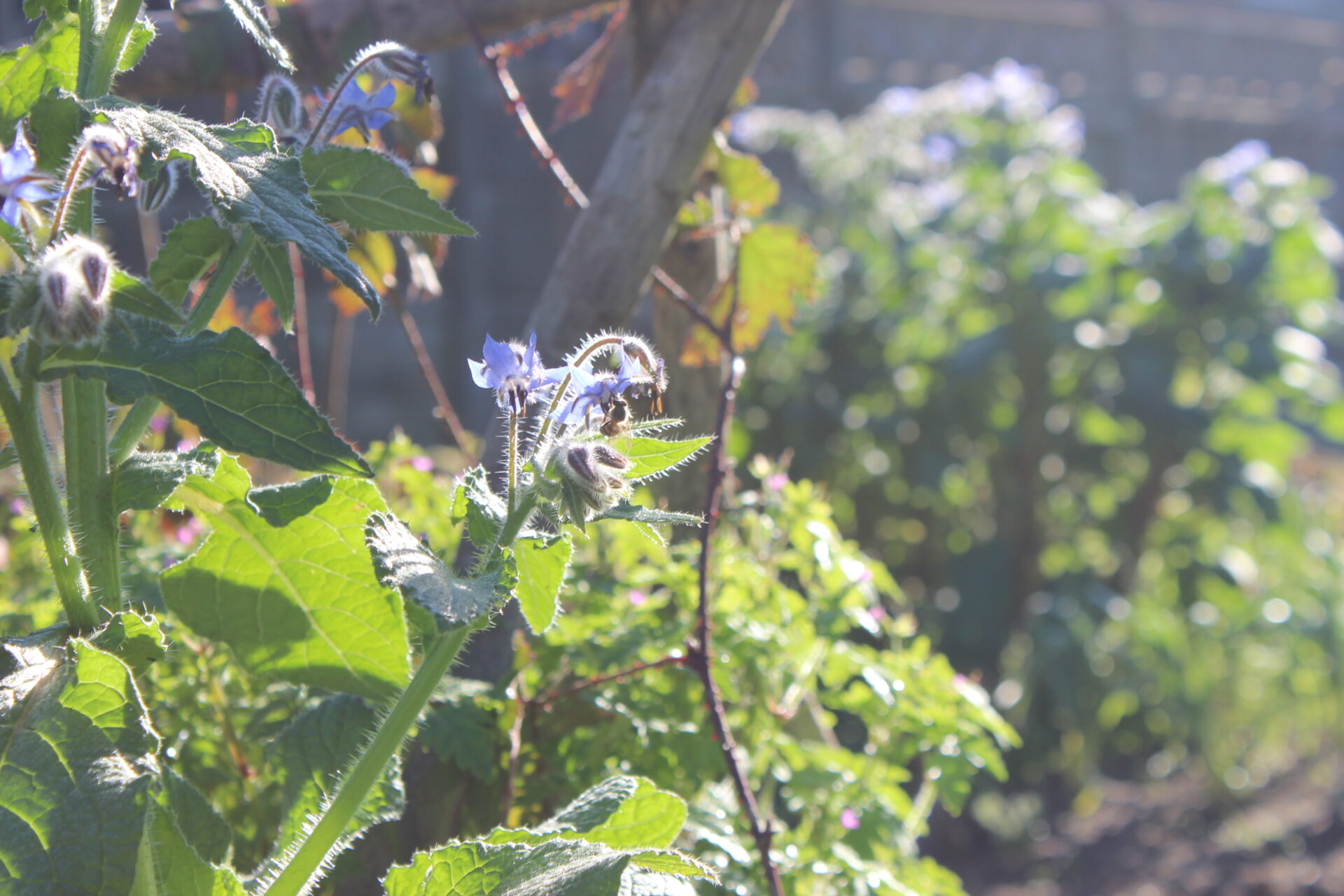

Mandy Leibbrandt, founder of the Suikerbossie Park community garden, encourages those who can to get involved in their community. “I would say: ‘Know your neighbour, love your neighbour and help out where you can’,” she says. “Whether it’s neighbourhood watch or in a community garden, but get involved. Get involved somewhere where you can uplift your community.” PHOTOS: Daniela Botha
Overcoming hunger, building pride
In Johannesburg, the name Siyoyisile Indlala means “we have conquered hunger”. For project development manager Gregory Mkhize, this is more than a name; it is a mission.
“[Our farm] began as a response to hunger and poverty,” Mkhize says. “[The aim] was to create a self-sustaining environment where everyone can thrive. It represents community empowerment, education and environmental stewardship.”
The community farm’s agricultural school runs short programs in agripreneurship, composting and rabbit farming production. One of Mkhize’s favourite memories is of a young participant who launched his own vegetable garden after training.
“Seeing his pride as he shared produce with the community was incredibly rewarding,” he says. “[It’s] a testament to the impact of our work.”
Siyoyisile Indlala shares their self-made concentrated liquid fertiliser with nearby gardens.
“Many have adopted this sustainable fertiliser as part of their regular practices, leading to a reduction in chemical inputs and costs,” Mkhize says. “This builds stronger community ties as participants share knowledge and resources.”
A similar transformation is taking place at the Suikerbossie Park community garden. Leibbrandt recalls a neighbour in his 30s, deaf and mute, who previously had little to occupy his days.
Through participating in the garden, he gained his own patch to tend and later found employment with a local gardening service.
“The garden gave him a purpose […] that was quite beautiful to see,” says Leibbrandt.
Partnerships, policy and persistence
Community gardens rarely succeed alone. Suikerbossie Park secured its land through a partnership with City of Cape Town’s Recreation and Parks division, highlighting that persistence can break through red tape.
In Woodstock, collaboration with the Alpha School for Learners with Autism has sustained the Peace Garden for 17 years. Such examples indicate that when municipalities, schools and citizens work together, neglected spaces can be transformed into thriving, resilient ecosystems.
Urban food production strengthens not only food security but also social cohesion, ecological stewardship and adaptive capacity in cities facing inequality, claims Li in their 2024 article.
Leibbrandt finds that the garden has brought the community together.
“People actually know each other now,” she says. “The park used to be a big empty space. It was dirty. Criminals used to use it for business premises and dealing drugs.”
“People didn’t really take their children there or walk their dogs. Now it’s a completely different picture,” she says. “People are walking their dogs, exercising, bringing their children, having their birthday parties.”
Everyday individuals planting the seeds
What ties these initiatives together is the shared belief that ordinary people can transform spaces and futures. Mkhize says that everyday individuals have a vital role to play “in reclaiming public spaces and fostering resilience”.
“By engaging in farming, gardening and educational programs, they contribute to food security, environmental sustainability and social cohesion,” he says.
“My dream is to see Kayamandi youth [participating] in farming [and studying agriculture],” Patekile says, regarding his vision for Kayamandi. He also envisions Imveli Farm producing food to supply the Western Cape and beyond.
Ozabor says that collective action has ripple effects. By working together, people normalise sustainable practices, turning eco-consciousness into a cultural norm. That is how communities can move from awareness to action.
Anyone can be the change in their community, says Mkhize. “To everyday South Africans looking to uplift their communities through urban or community farming, I would say: ‘Start small, be patient and connect with others’,” he says. “Every effort count[s] and each step you take contributes to building a stronger community.”
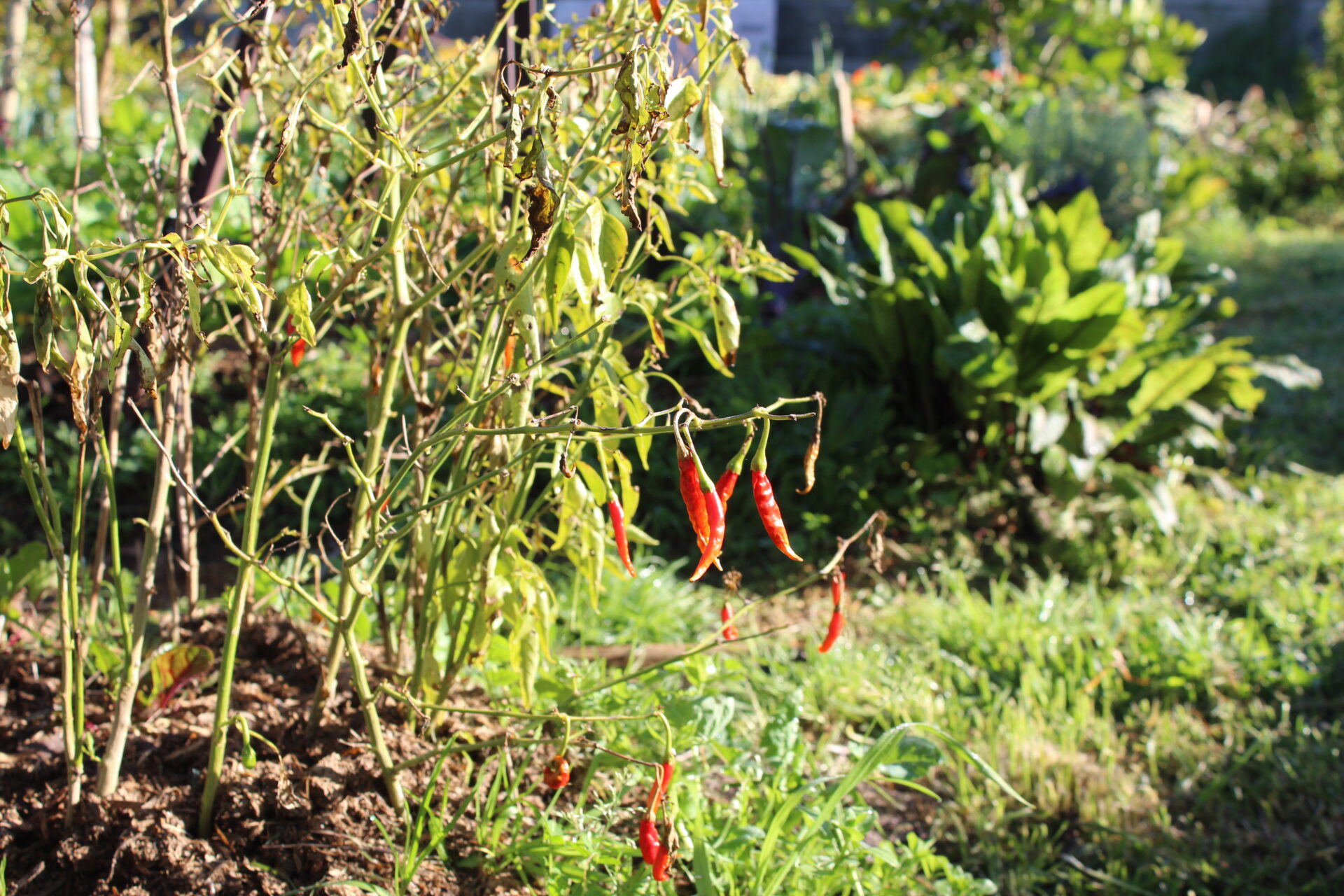

Mandy Leibbrandt started the Suikerbossie Park community garden in Cape Town during Covid-19. “The aim of the project is food security for our neighbourhood.” she says. “We do everything in a permaculture, environmentally friendly way.” PHOTOS: Daniela Botha